Easter Escalation
Iran war spirals, Hormuz stays shut to LNG, and gas markets still aren’t paying attention


Over the past five days, the United States lost an F-15 fighter jet over southern Iran, launched a large-scale rescue mission deep inside Iranian territory that reportedly lost two Black Hawk helicopters and several other attack aircraft, and watched Iran tear up a mediated deal to allow Qatari LNG tankers through the Strait of Hormuz.
Amid these dramatic developments, the President of the United States issued a desperate expletive-strewn threat for Iran to re-open the Strait of Hormuz or face the complete destruction of its power grid.
At the time of writing on Tuesday morning, the deadline expires tonight. The Pentagon is reportedly preparing strike plans targeting Iranian power plants that serve both civilian and military purposes, in an attempt to thread an impossible needle between executing the President’s wild threats and avoiding war crime accusations.
None of this is normal. None of this was priced a few weeks ago. And natural gas markets, astonishingly, still appear to be betting that it will all be wrapped up before winter.
Let’s unpack what happened, what it means, and why the forward curve is (still) living in a fantasy.
Sweet surrender on the quayside
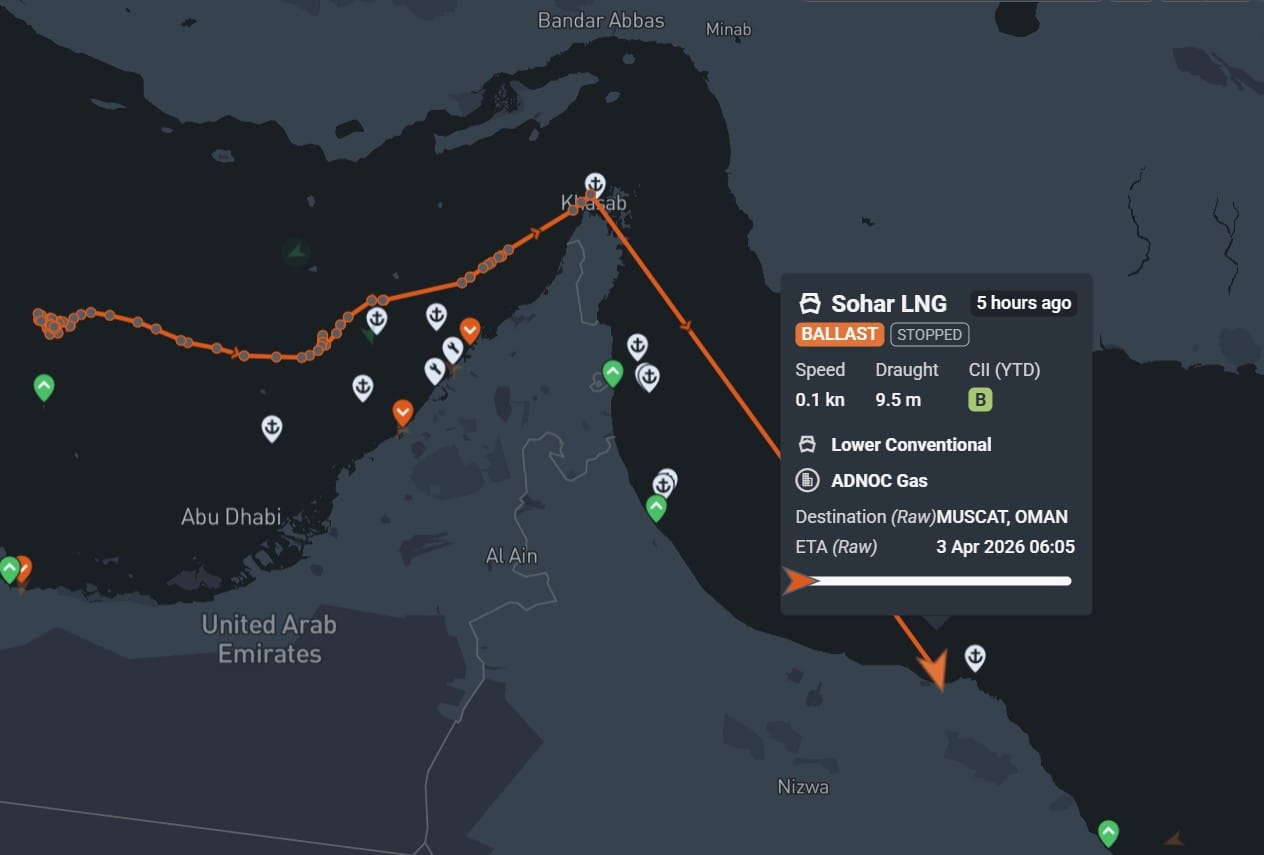
Last Thursday 2 April, the first LNG carrier traversed the Strait of Hormuz since the outbreak of hostilities. But the Omani vessel went in ballast. No LNG was exported. The ship simply repositioned back to Oman. It was a logistical move.
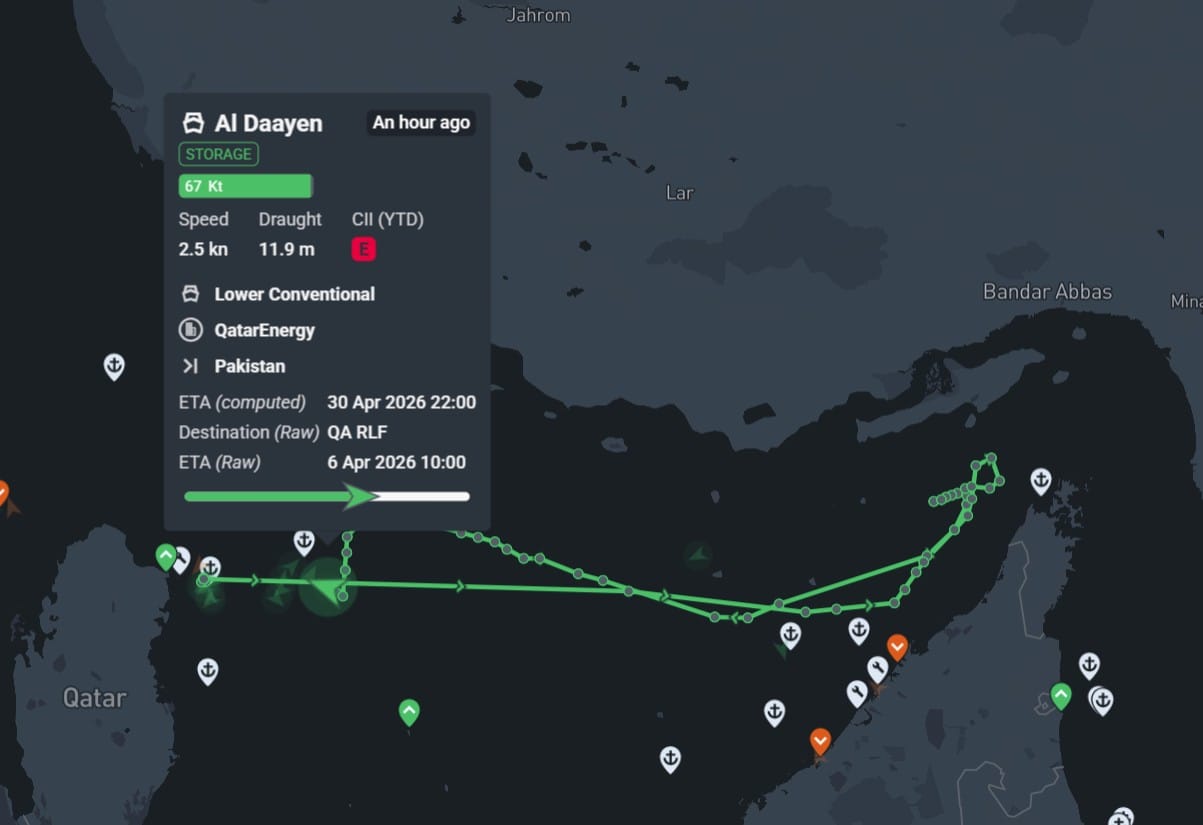
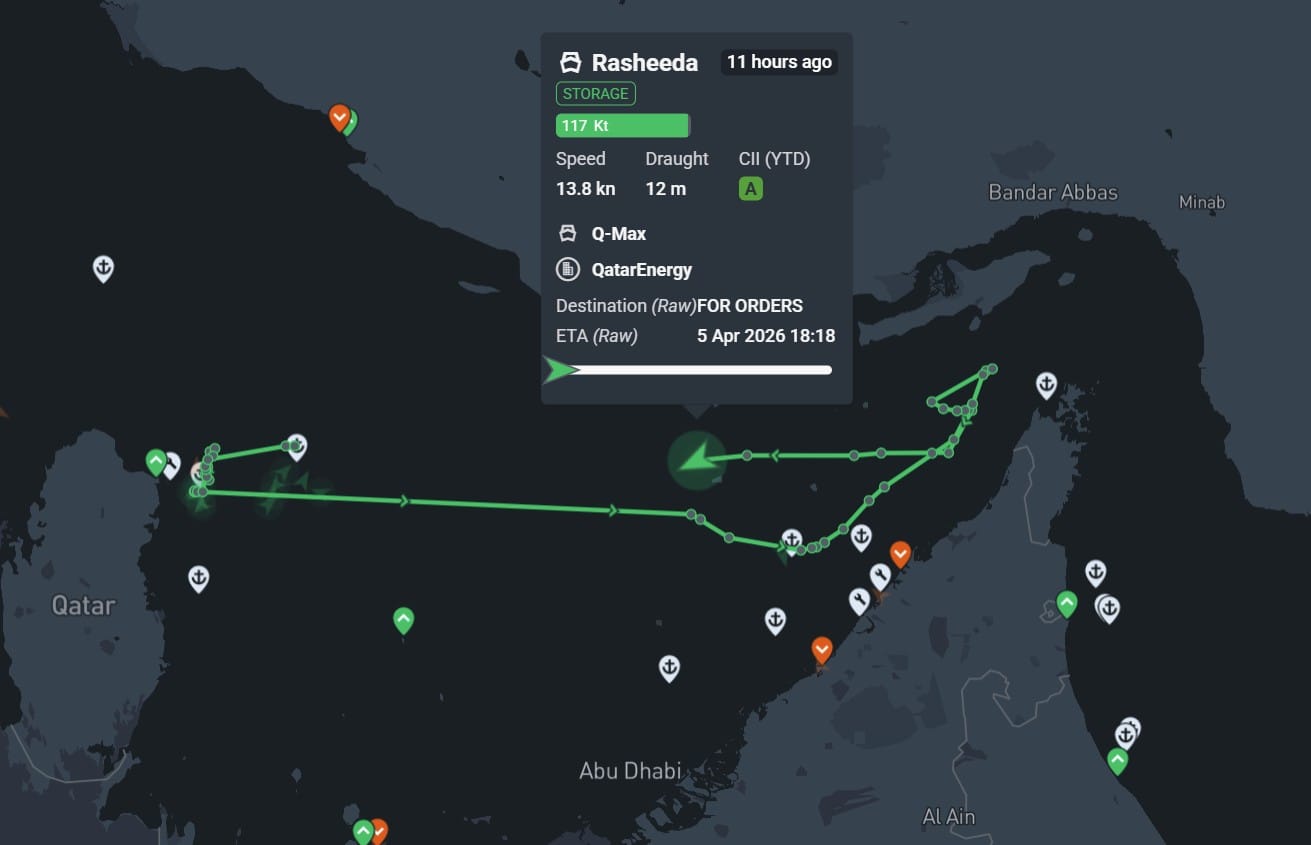
Then on Sunday 5 April, two loaded Qatari LNG tankers that had reportedly been cleared to transit the Strait under a deal brokered via Pakistani mediation turned back mid-voyage. Iran had agreed to let them through. And then it changed its mind.
Source: Kpler
That deal, reportedly mediated by a third party and negotiated with US oversight, was supposed to be the first crack in the blockade. Its collapse speaks volumes about Iran’s strategic posture: Tehran is not interested in incremental concessions or off-ramps. It is consolidating control over the chokepoint and seeking to establish permanent leverage over the global energy economy.
In the shadow of the cargoes
For weeks now, the Iranian Revolutionary Guard has been imposing an informal toll on vessels transiting the Strait, with arbitrary charges reportedly reaching $2 million per ship. This is raw extortion, but it is evolving. The Iranian Parliament has now approved a bill to formalise the levy that, if enforced, would structurally reconfigure the cost and logistics of transiting the world’s most important energy chokepoint.
The implications cascade. A formalised toll on Hormuz would permanently inflate the cost of Gulf LNG, oil, fertiliser, and petrochemical exports. It would layer an additional premium on top of the war risk premium already embedded in LNG spot prices. It would represent, in effect, Iran claiming a permanent economic stake in global energy trade. A tollbooth at the throat of the world’s hydrocarbon supply.
The only scenario in which this new energy world order does not materialise is regime change in Tehran. And as this weekend’s events demonstrate, that prospect is not getting closer.
A policeman shines a light
On Friday 3 April, a US F-15 fighter jet was shot down over southern Iran. Both crew members ejected. One was recovered by US forces. The other was stranded inside Iranian territory.
Over the Easter weekend, the US mounted an audacious large-scale rescue operation to extract the downed pilot. By all accounts, it succeeded, but at significant cost. Iran’s joint military command claimed it destroyed two US Black Hawk helicopters during the mission.
The US was reportedly forced to destroy two of its own aircraft on the ground at a makeshift airstrip in Isfahan after a technical mishap prevented their departure. Separately, an A-10 attack aircraft was also lost after being hit by Iranian defence forces.
Foghorn blowin’ out wild and cold
The scale and cost of this operation, which involved dozens of aircraft and hundreds of soldiers, have drawn scrutiny. Rescue missions for a single downed pilot do not always require this level of force projection deep inside hostile territory, although one US General described the loss as acceptable.
Iran’s Foreign Ministry spokesman Esmaeil Baghaei suggested the operation may have been deceptive plan aimed at “stealing uranium”. He noted that the makeshift airstrip used by US forces sits a long way from the rescued pilot's supposed location, but just 25 km south of the Isfahan tunnel complex.
Isfahan is where the International Atomic Energy Agency (IAEA) believes roughly half of Iran’s 60%-enriched uranium stockpile is stored. The IAEA has not accessed the site since June 2025. IAEA chief Rafael Grossi stated in March that the stockpile is believed sufficient for approximately 10 nuclear weapons.
It must be stressed: the fog of war is thick. Information from Washington and Tehran is self-serving and frequently contradictory. Third-party commentary on social media is consistently unreliable. Energy Flux has no independent insight into what actually happened at Isfahan and is not endorsing any particular narrative.
What we can observe is this: the material losses incurred, the proximity to a known nuclear facility, and the scale of the operation relative to its stated objective have generated doubt about the official explanation. That doubt, warranted or not, compounds the strategic uncertainty that is already paralysing the region.
What is not in doubt is the bottom line: the US has now lost multiple aircraft and helicopters inside Iranian territory in a single weekend. Whatever the mission’s true objective, this is not the profile of a military campaign that is approaching decisive resolution.
No money in our jackets and our jeans are torn
Against this backdrop, the President’s public statements have escalated to a register that is extraordinary even by his own standards.
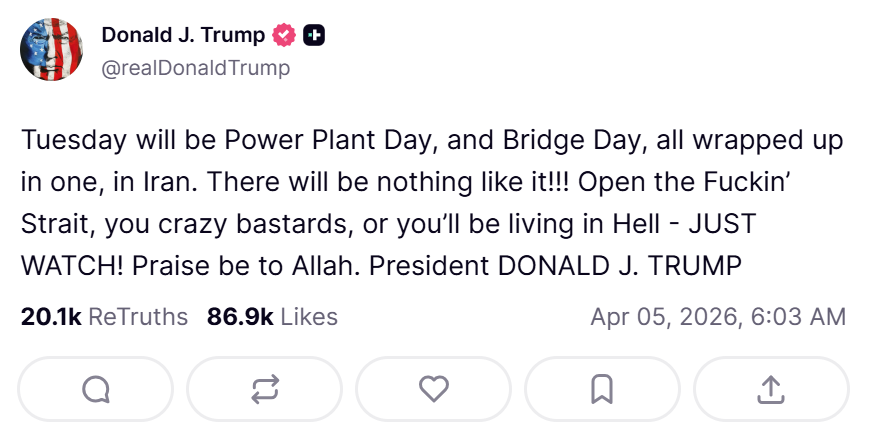
On Monday 6 April, he doubled down: “every power plant in Iran will be out of business, burning, exploding, and never to be used again” if Iran does not reopen Hormuz by midnight tonight.
The expletive-laden rant and escalating threats reveal the depth of frustration in Washington at a situation it initiated but cannot control. Iran has absorbed airstrikes, absorbed sanctions, and absorbed the loss of military assets, and it has not reopened the Strait. Its leverage over Hormuz remains intact. And every escalation from Washington appears to harden Tehran’s resolve rather than weaken it.
The drama is gripping, and the humanitarian stakes are real. But for energy market participants, the most urgent question is: does the traded price of natural gas and LNG adequately reflect all of this mayhem?
The risk-reality gap is widening.
New third-party modelling of the Strait of Hormuz closure confirms a stark disconnect between what the TTF forward curve is pricing and what the events on the ground are signalling.
The analysis below unpacks the methodology, walks through three disruption scenarios, and explains why the implied market view on the timeline to normality is dangerously detached from reality.
This is market-critical information at a moment of extreme risk and high stakes.

Member discussion: Easter Escalation
Read what members are saying. Subscribe to join the conversation.