Iran: US Energy Dominance laid bare
Trump’s war of choice is a bonanza for US LNG exporters, and a catastrophe for everyone else

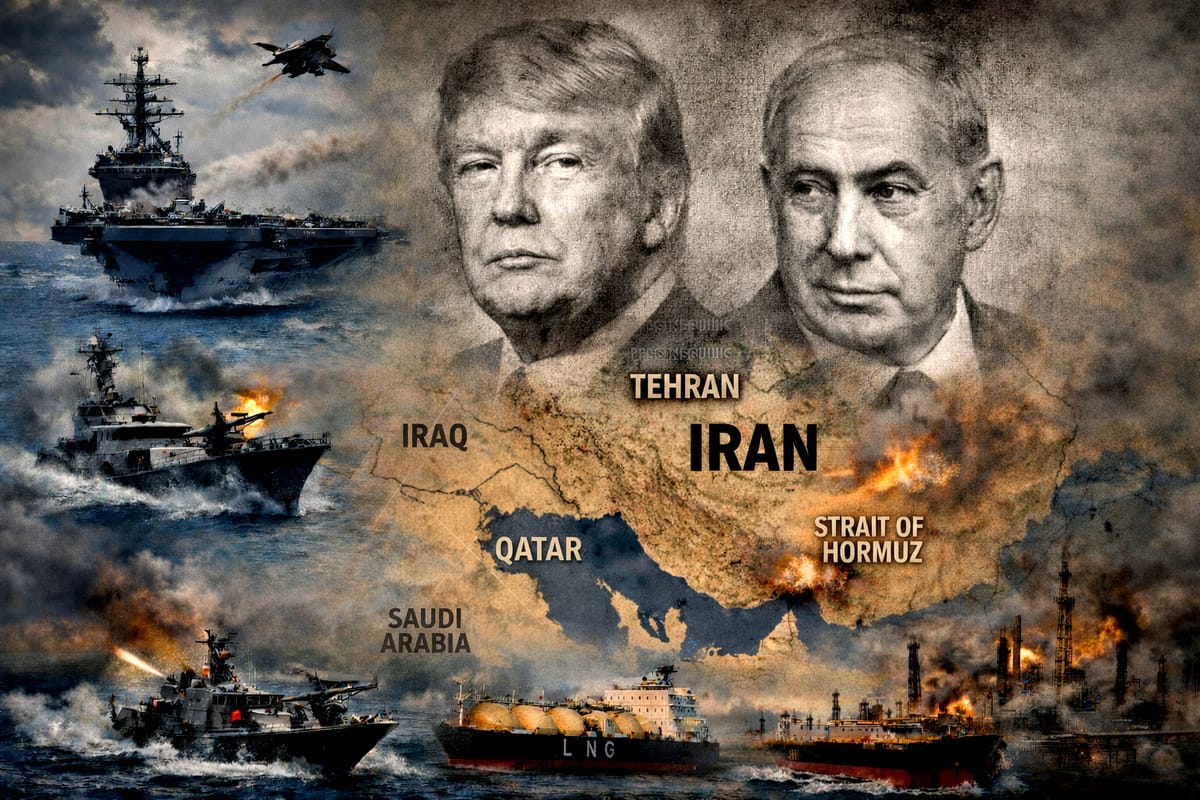
Hours before US and Israeli warplanes began pummelling Iran on 28 February, Oman’s foreign minister Badr Albusaidi told CBS that a breakthrough had been reached in nuclear talks. Iran had agreed to zero stockpiling of enriched uranium with full International Atomic Energy Agency verification, a concession that went further than anything achieved under the JCPOA, the Obama-era Iran nuclear agreement. A new deal, Albusaidi said, was “within our reach”.
It was not reached. Instead, Operation Epic Fury killed Supreme Leader Ayatollah Khamenei, flattened military and civilian infrastructure across Iran, and triggered retaliatory missile strikes on the United Arab Emirates, Kuwait, and Bahrain. President Trump’s 2:30am video statement made the objective explicit: regime change. A diplomatic off-ramp existed, but was torched. The question the world must confront is not whether this war was avoidable, but who benefits from it.
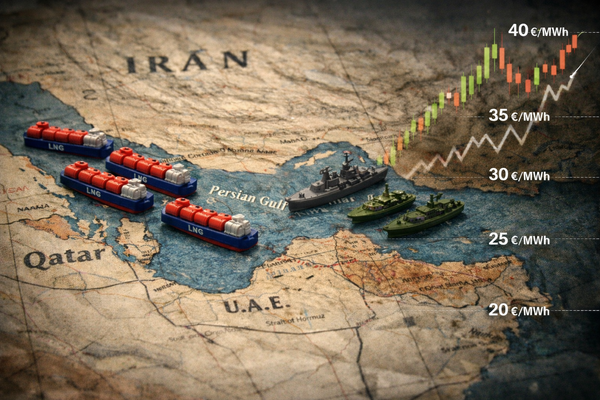
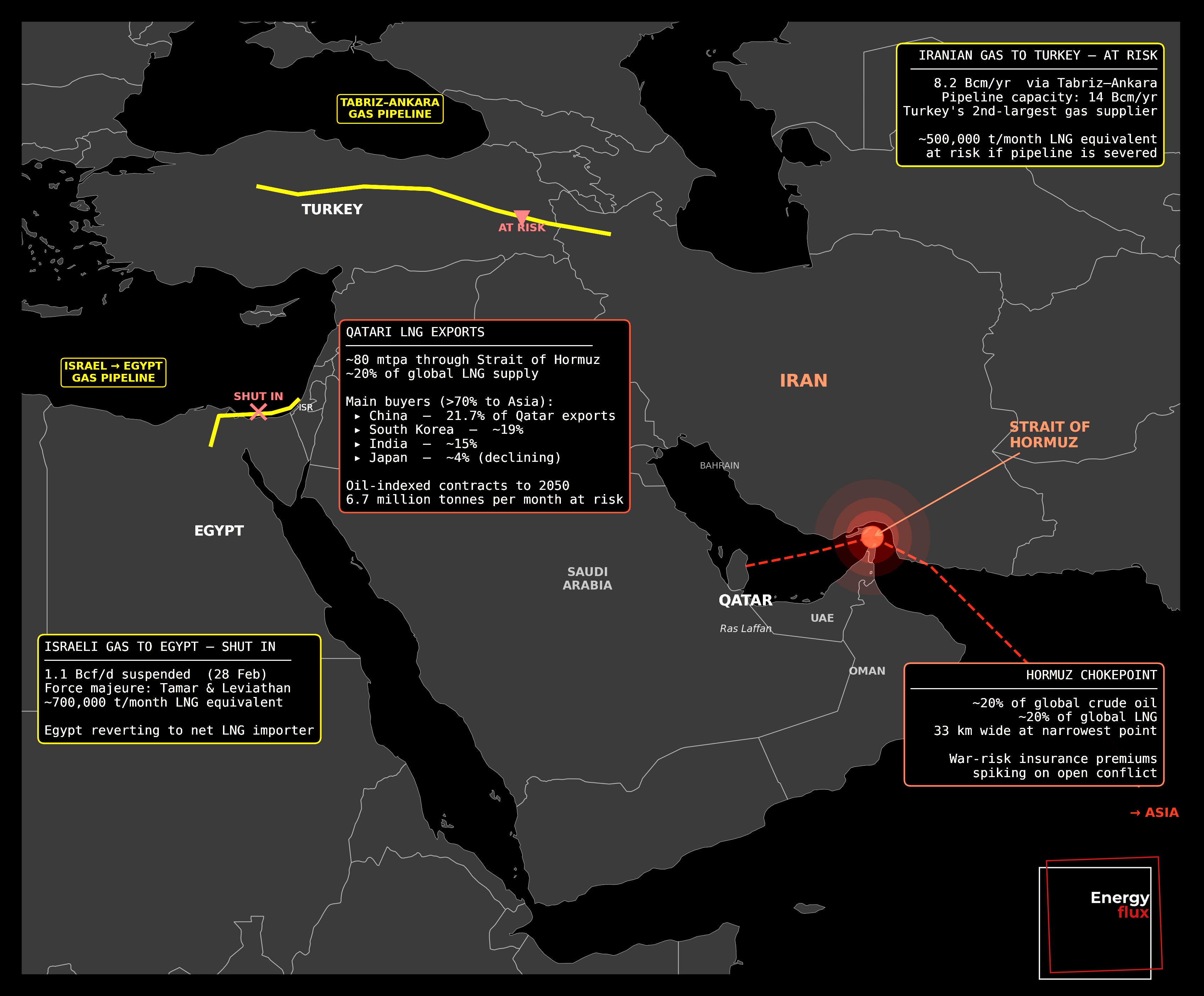
The Strait of Hormuz is the jugular of the global LNG trade. Qatar ships more than 80 million tonnes per annum (mtpa) of LNG through this 33-kilometre bottleneck, around one fifth of total global supply. Its buyers are overwhelmingly in Asia: China, South Korea, Japan, India, Taiwan, Pakistan and Bangladesh collectively absorb more than 80% of Qatari cargoes under long-term, oil-indexed contracts stretching as far out as 2050.
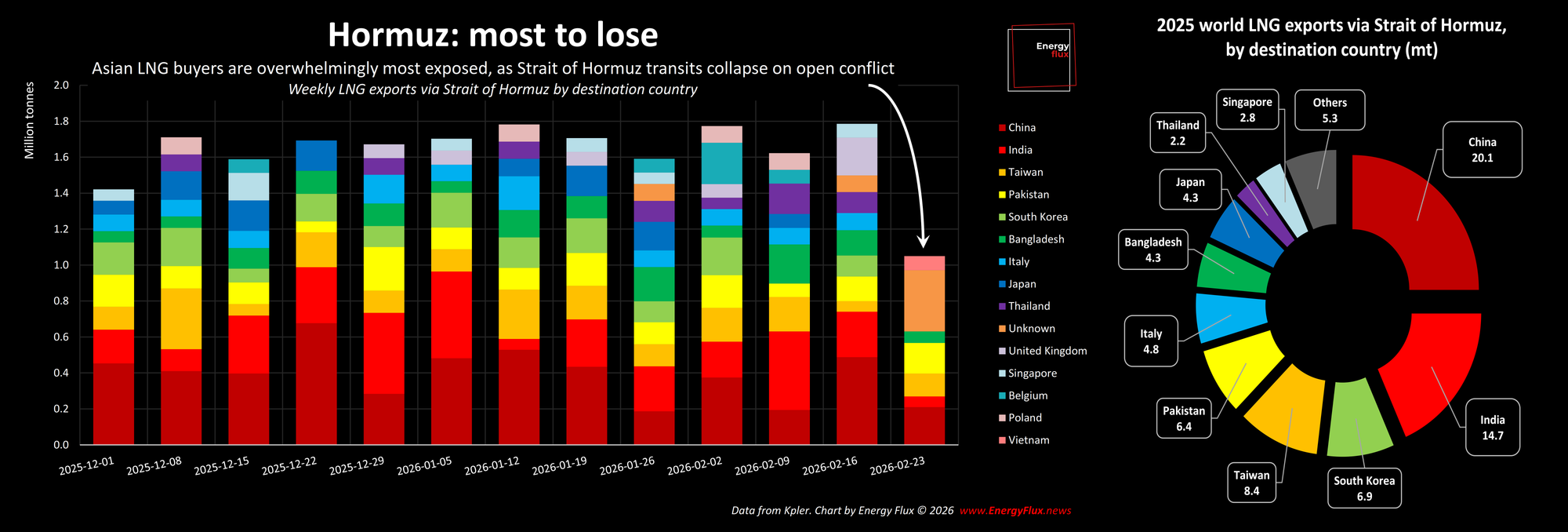
In peacetime, tankers load at Ras Laffan, transit Hormuz, and deliver on schedule. In open conflict, that choreography disintegrates. Iran has already demonstrated its willingness to strike back by launching missiles at countries hosting US bases. Credible threats to safe passage through Hormuz, even without a full closure, are enough to spike war-risk insurance premiums, disrupt shipping schedules, and force buyers to scramble for alternatives.
Qatar this morning suspended LNG production after its Ras Laffan and Mesaieed industrial facilities were damaged by Iranian drones. The company is expected to declare force majeure on LNG exports.
QatarEnergy will do everything in its power to honour as many of its contractual commitments as possible, likely by arranging swap deals to redirect cargoes from other sources. But the capacity to do this is tiny compared to the immensity of the lost LNG volumes.
Everything now depends on two variables: the duration of the conflict, and the willingness of insurers to underwrite passage through a contested waterway. If war-risk premiums become prohibitive, or if a single LNG carrier is struck, the entire edifice of Qatari LNG trade is at risk of prolonged paralysis, regardless of how long the FM declaration lasts.
The pricing implications are savage. Dutch TTF soared +30% to €45/MWh during trade on Monday, and JKM futures – the Asian spot LNG benchmark – soared +40%. And this is just the start: markets are pricing in uncertainty, not physical tightening, because LNG shipments take weeks to arrive. As Qatari LNG outflows dry up, Asian buyers will turn to the spot market to make up for the shortfall.
Qatar’s long-term contracts are overwhelmingly oil-indexed, meaning the cost of replacement cargoes rises in lockstep with crude prices that are themselves surging on a colossal Iran risk premium, since around 20% of world crude supply transits the same Hormuz chokepoint. Buyers forced into the LNG spot market face a double hit: higher benchmark prices and a shrinking pool of available cargoes.
Disruption beyond borders
The fallout extends well beyond Hormuz. Israel suspended 1.1 billion cubic feet per day (Bcf/d) of natural gas exports to Egypt on 28 February, invoking force majeure on supply contracts from the Tamar and Leviathan offshore fields. Egypt, which only last year signed a landmark $35 billion, 15-year gas import deal with Israel, is scrambling to bring forward contracted LNG deliveries. A country that had been wavering on the edge of energy self-sufficiency is now pivoting back to net LNG importer status, adding incremental demand to an already tightening Atlantic market.
Then there is Turkey. Iran supplied 8.2 billion cubic meters (Bcm) of pipeline gas to Turkey in 2025, making it Ankara’s second-largest supplier after Russia. Those flows are now at risk. The Tabriz–Ankara pipeline, with a nameplate capacity of 14 Bcm per year, runs directly through Iranian territory that is being systematically targeted by US and Israeli ordnance. Even a temporary outage would force Turkey to procure additional spot LNG cargoes at precisely the moment when every spare molecule is being bid up.
On a monthly basis, Qatar alone ships roughly 6.7 million tonnes of LNG through the Strait of Hormuz; Israeli gas to Egypt amounts to around 700,000 tonnes of LNG-equivalent; Iran’s pipeline exports to Turkey translate to roughly 500,000 tonnes of additional LNG demand. That is close to 8 million tonnes of supply at risk or requiring replacement if Hormuz transits and wider Middle East gas exports are compromised. All of this could happen in a market where the margin of comfort is already thin.
A month-long disruption is not impossible; Iran rehearsed its mine-laying capability last June in preparation for conflict. If Iranian forces deploy subsea explosives, their removal would require not just a ceasefire but dedicated US Navy minesweeping operations.
In the best case, disruptions are short-lived and resolved through swaps, rerouting, and de-escalation within days. In the worst case, an extended conflict and insurance market paralysis could remove supply from global markets for weeks or months, replicating the conditions of late 2021 and the subsequent price shock of 2022.
Which brings us to the real story: Donald Trump’s Energy Dominance agenda.
💡 Get the full picture amid fast-moving energy conflict: join the dots on geopolitical developments with a Premium subscription to Energy Flux — the home of fiercely independent market analysis

Member discussion: Iran: US Energy Dominance laid bare
Read what members are saying. Subscribe to join the conversation.