Scarcity, abundance and urgency
How natural gas prices dictate the pace of energy transition

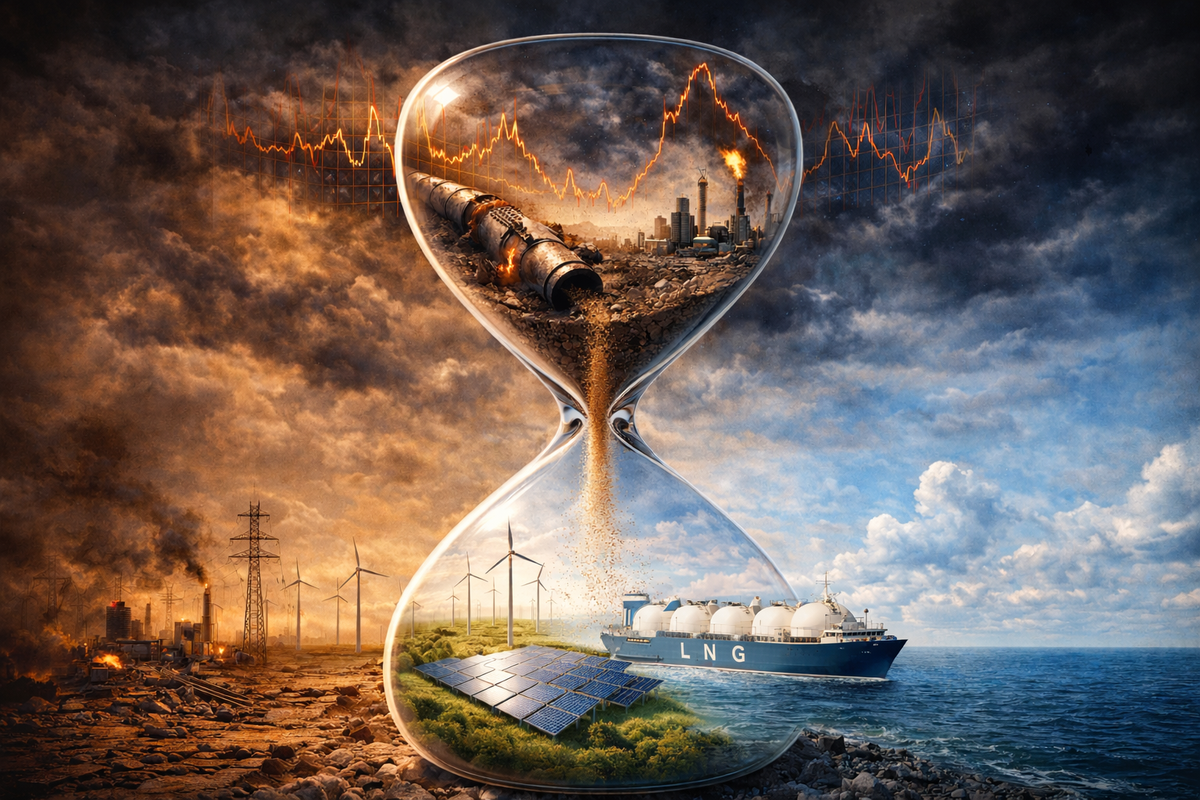
For much of the past four years, it has felt natural to explain the energy transition through the language of crisis. Gas was scarce. Power was expensive. As security assumptions collapsed, they were replaced by a sense of urgency.
In Europe especially, the shock was profound enough to cut through political inertia that had resisted change for decades. Decisions that once seemed controversial or unrealistic were suddenly unavoidable. Renewables, grids, and storage stopped being luxury climate projects and started being treated as core infrastructure.
That period mattered. It genuinely changed the trajectory of policy. It also shaped how many of us came to think about the transition itself: as something that advances when systems are stressed, when prices hurt, and when there is no comfortable alternative.
This brings good news and bad news. The good news is that we are no longer living in that moment. The bad news is the same: we are no longer living in that moment.
Scarcity, abundance and urgency: video monologue (YouTube)
Today, Europe has abundant LNG, adequate gas in underground storage, and wholesale prices that are a long way from their wartime peaks. Asia, too, has found some relief. The emergency has passed, even if the structural vulnerabilities and geopolitical risks have not. And with that shift comes a subtle but important change. The transition is still moving forward, but it is moving under very different conditions.
This is where the scarcity-versus-abundance tension becomes useful, not as a slogan, but as a way of understanding why the transition now feels both real and incomplete at the same time.
Scarcity forces direction. It narrows choices until action becomes unavoidable. That is what happened between 2021 and 2023.
Abundance, by contrast, slows execution. It prolongs decision-making, curbs the ambition of reforms, and lowers the threshold on how much political and economic pain can be tolerated along the way.
The commitments made during the crisis have not been reversed. But they are now being carried out in an environment where the pressure has eased. That matters more than is often acknowledged.
When energy is scarce and expensive, reforms that would normally be politically toxic suddenly become possible, inevitable even. Volatility is managed. Policymakers take risks because the alternative is even worse.
When energy becomes cheaper and more available, even temporarily, that tolerance fades. The same reforms still make sense on paper, but they no longer feel urgent. Timelines stretch. Compromises multiply. Gas quietly regains its role as a reassuring backstop.
This does not mean the transition will stall. It means it is about to shift gears.
Bridge fuel to infinity
Think about how gas sits within the system. Even as renewables expand rapidly, gas continues to define reliability standards, market design, price formation, and political comfort levels. New renewable projects are increasingly designed to smooth volatility, firm output, and behave in ways that resemble conventional generation. Storage and hybridisation grow, but largely to stabilise gas-heavy systems rather than to make gas unnecessary.
In that sense, abundance stabilises incumbency. It allows the system to change without digging up its own foundations. The result is progress that is both visible and palpable, but simultaneously unresolved: more capacity, more complexity, and yet persistent stress around grids, pricing, and investment returns.
The LNG glut sharpens this dynamic. For importing regions, abundant LNG reduces the sense of emergency and restores a degree of political calm. That calm is widely interpreted as success. In reality, it is closer to deferral. The underlying exposure to global gas markets remains; it is simply being masked by favourable conditions.
At the same time, the globalisation of gas markets pushes pressure elsewhere. In the United States, LNG exports tighten domestic balances and lift prices, creating a different set of tensions. Ironically, this strengthens the economic case for renewables and electrification, even as political momentum moves against decarbonisation. The transition no longer moves in step across regions. As gas markets converge, they fragment the pace and character of energy system change.
2026 and beyond
Looking ahead to 2026, this matters because the next constraints on the transition are unlikely to look like the last ones. Fuel scarcity is no longer the most obvious fault line. Grid congestion, delayed connections, curtailment, suppressed price signals and perverse incentives are emerging as more immediate perils.
Storage will prove essential, but not all early investments will work as advertised, especially at sites that were actively designed to smooth away the volatility that storage depends on. Markets will suppress volatility just when storage needs it.
Gas demand is likely to decline more slowly than many scenarios assume, even as renewable capacity continues to grow, because gas is becoming more affordable and systems have not yet been forced to operate without gas as an implicit safety net. Gas power plants will run fewer hours but retain strategic value. Policymakers will quietly accept this mismatch rather than confront the system redesign required to eliminate it.
Perhaps most importantly, the next acceleration in the transition is unlikely to come from another round of strategy documents or targets. It will come, as before, from stress. Another shock, whether geopolitical, climatic, or infrastructural, will do more to unlock difficult reforms than years of consensus-building in benign conditions.
Time, the most precious gift of all
None of this means abundance is undesirable. The relief from high energy prices is real and necessary. But it brings its own trade-offs, and changes incentives. It prioritises optimisation over genuine structural transformation. It encourages systems to adapt around existing structures rather than replace them.
Scarcity gave the energy transition its direction, purpose, and renewed vigour. Abundance now threatens how fully that direction is followed, and how quickly the momentum fades. The risk is not that progress stops, but that it becomes comfortable enough to lose its edge.
The uncomfortable truth is that the decisive next phase of the transition will likely begin only when systems are once more forced to function without assuming that cheap gas will be there in the background, ready to make the hard problems go away.
For now, abundance is buying time. Whether that time is used wisely remains an open question.
Seb Kennedy | Energy Flux | 23 December 2025

Member discussion: Scarcity, abundance and urgency
Read what members are saying. Subscribe to join the conversation.