The Great Gas Risk Mispricing
Markets are failing to reflect compounding supply shortages and Iran conflict escalation risk

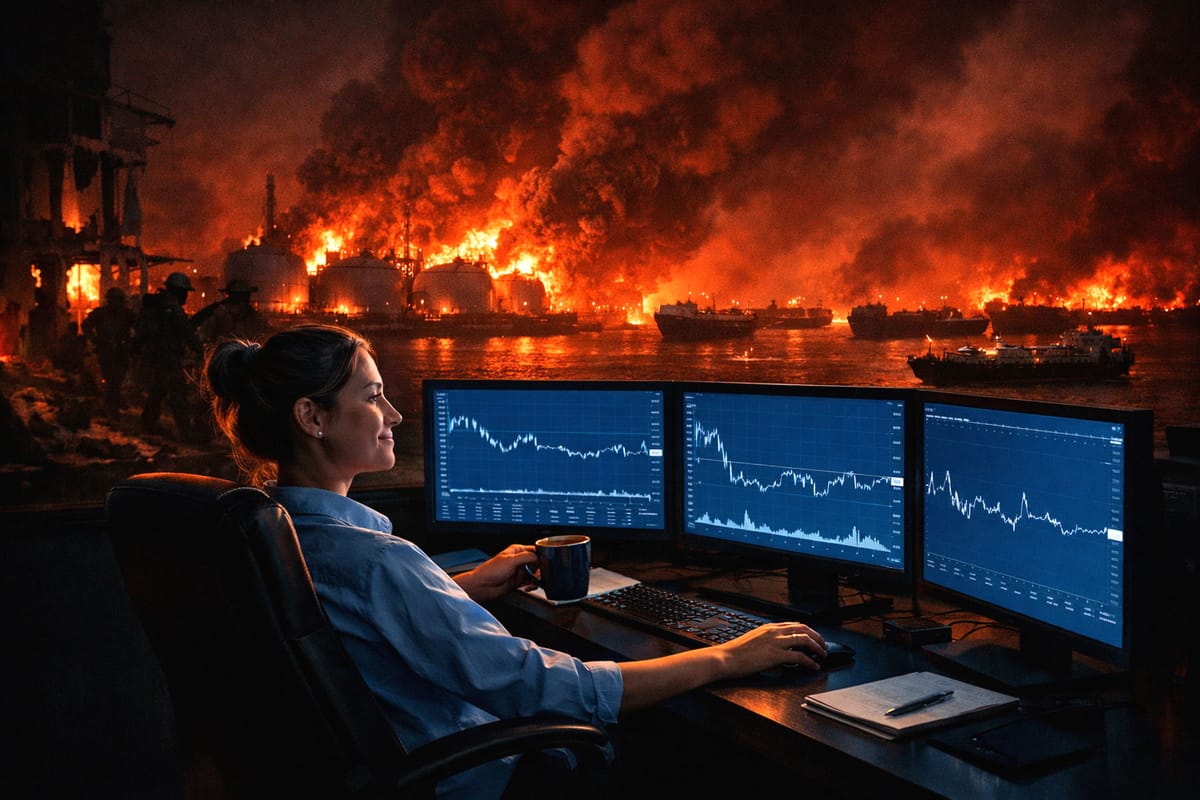
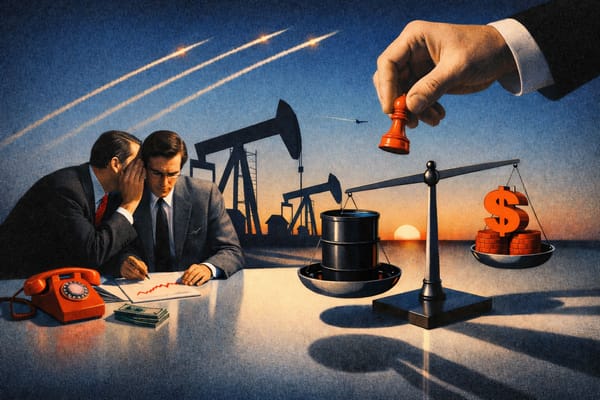
The physical gas market is screaming. Financial markets are not listening.
This week’s 99-slide Chart Deck lands at a moment of extraordinary divergence between what the molecules are telling us and what paper markets are willing to price in.
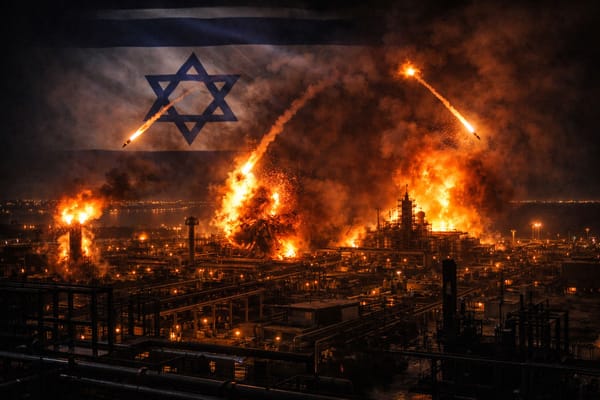
The Middle East energy war is metastasising into what is shaping up to be the most severe supply disruption in modern history. Yet the front-month contract on Dutch TTF, the European benchmark, is trading in the same €48-54/MWh range it occupied before Iranian missiles struck Ras Laffan and QatarEnergy declared force majeure on long-term supply contracts (slides 9-14).
The facts speak for themselves. The largest single source of LNG on the planet has been physically shut in for an undefined period. About 12.8 million tonnes per year of liquefaction capacity is damaged and likely offline until the end of the decade. The last of the Qatari cargoes loaded before the outbreak of war will arrive at their destinations in the coming days, after which there will be no more.
Qatar’s long-term buyers will need to either fork out an extra $40-50 million per cargo to replace lost oil-indexed volumes in the spot market, or go without (slide 55). Most will wait it out, because the market’s dominant narrative is that a peace deal is around the corner.
It is not.
Yes, there are back-channel talks. But there is zero overlap between stated objectives and red lines on the US-Israeli and Iranian sides.
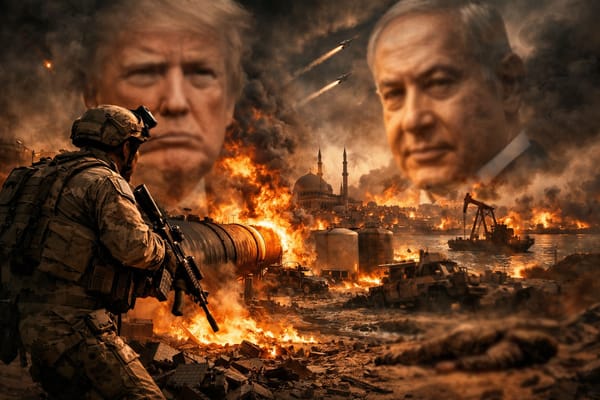
The Trump administration is jawboning markets with vague talk of negotiations while simultaneously deploying thousands of troops for what resembles preparation for a land incursion into Iranian territory. Traders seem mesmerised by the rhetoric, treating every vaguely conciliatory soundbite as a reason to sell risk premium out of the curve. The disconnect between Washington’s desperate rhetoric and the chaotic flywheel of a war it cannot stop is striking.
Sounding the risk alarm
The TTF Risk Model cuts through the bluster. This week it is emitting its deepest bullish signal ever recorded. For subscribers who have followed this framework over time, that context matters enormously.
The model is a calibrated composite of curve structure, positioning data, physical LNG flows, and behavioural signals. Designed as a low-latency, high confidence signal, it does not respond to headlines. It responds to the structural asymmetry between where risk is priced and where risk actually sits. Right now, that asymmetry is vast. Bullish risk is under-priced to a degree the model has never previously identified. This section alone is worth the price of admission (slides 35-38).
If your base case is a short, sharp conflict that normalises in just a few months, you’re betting against big money. The Storage-Speculation Nexus regression model shows investment funds pivoting hard into 2028-dated TTF maturities, an astonishing pattern that carries profound implications for the European gas storage refill cycle and well beyond (slides 40-43).
Two weeks ago, funds executed the biggest gross TTF liquidation ever; a panicked unwind that tells its own story about how badly wrong-footed the market was by the escalation (slides 21-27). But where capital is flowing next is even more instructive.
Europe’s eternal crisis
The regression model reveals speculative positioning that prices a scenario in which Europe kicks the refilling can down the road endlessly. Prompt prices too high to restock adequately; depleted inventories heading into Winter 2026-27; an even more brutal procurement challenge in Summer 2027; and successive price shocks compounding into 2028 and beyond.
In other words, investment funds are not just betting on a bad winter. They are betting on a multi-year crisis in which Europe is exposed to rolling supply shortfalls, season after season, with no structural resolution in sight.
This is no longer a theoretical risk. It is the base case if Hormuz does not reopen swiftly. And there is no credible catalyst for that to happen.
Nobody is saying this publicly. But when big capital reconfigures exposure like this, it leaves footprints in the data. You just need to know where to look.
Commercial operators, for their part, are quietly slashing TTF exposure across risk management and discretionary portfolios (slides 28-32). The combined effect is that the long-short ratio of physical players relative to speculators has reached its most extreme outlier state ever. It is literally off the chart (check out the new X-axis on slide 33).
While front-month volatility reacts to whatever vacuous statement the commander-in-chief just dreamt up, the institutional gas market repositioning for a prolonged disruption. The data is unequivocal.
From feast to famine
Meanwhile, the revamped LNG Physical Balance index is plunging deeply into negative territory on what is, by any measure, a rapidly tightening supply shock now propagating out from the Gulf (slide 86).
The physical supply overhang from last year has not merely thinned; it has completely dried up. The market has flipped from a 0.8 mt surplus into a deficit of 0.3 mt in two short weeks, and is growing fast (slide 87).
South Asia took the biggest hit. Weekly LNG imports across India, Bangladesh and Pakistan have sunk to multi-year lows for this time of year (slide 95). But this does not go far enough: demand destruction must cut deeper, and across more geographies, to offset the scale of supply loss.
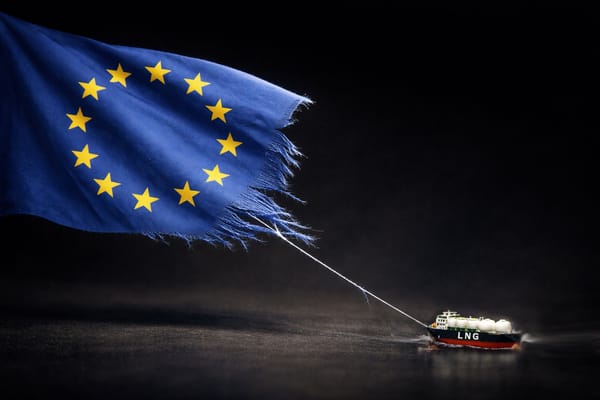
South Asian buyers, already priced out of spot LNG markets, are the canary in the coal mine. Europe is next. The fact that speculative capital is reaching all the way out to 2028 speaks volumes about how long the pain is expected to last.
This is the structural reality that the TTF curve is refusing to acknowledge. The energy crisis this conflict is already precipitating will linger for years. Its knock-on effects will reshape global energy systems for decades.
This week’s Chart Deck also covers the full spectrum of global benchmarks and regional dynamics:
💥 TTF, JKM and Henry Hub price action and volatility (slides 5-19)
💥 NWE-TTF basis spreads & EU-Asia tug of war for scarce cargoes (slides 44-51)
💥 Asian LNG pricing across oil-indexed, HH-linked and spot channels (slides 52-58)
💥 The economics of US LNG exports in distressed global markets (slides 59-73)
Ninety-nine slides. Every chart tells a piece of the same story: physical risk is ballooning, and paper markets are asleep at the wheel.
You’ve read the overview. Now get the data. Paid subscribers can access the full Chart Deck immediately, including the TTF Risk Model’s record-breaking signal, the Storage-Speculation Nexus regression outputs, granular vessel tracking, and the LNG Physical Balance index that’s flashing its most alarming reading since Energy Flux began publishing it.
If you’re a free reader and you’ve been on the fence, this is the week to upgrade. What’s unfolding across the Middle East is not a passing event. It is a structural rupture in global energy supply, and the data in this deck shows exactly how far the market still has to go to price it in.
👇 DOWNLOAD: 99 slides in .ppsx and .pdf format 👇

Member discussion: The Great Gas Risk Mispricing
Read what members are saying. Subscribe to join the conversation.