Gas industry goes to war over EU storage rules
Eurogas wants EU-wide storage targets to expire in 2027. GIE wants them to continue. Gasunie wants a strategic reserve. Brussels warns that botched intervention is a cure worse than the disease. They cannot all be right.

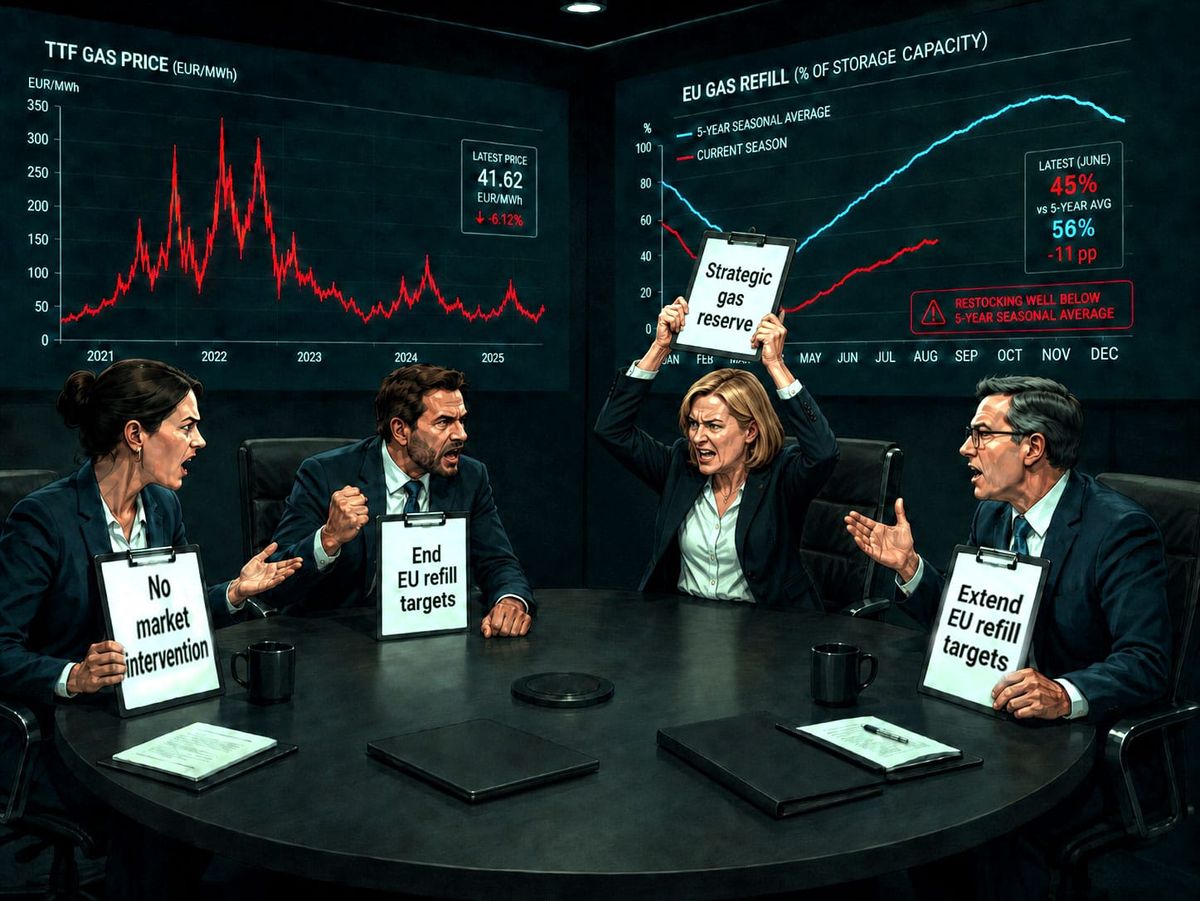
Europe’s simmering gas storage debate has broken out into an open fight.
Eurogas, the trade body representing Europe’s gas wholesale, retail and distribution sector, issued a new position paper this week calling for the current EU Gas Storage Regulation to expire in December 2027.
Its message is blunt: the 90% mandatory filling target was a crisis tool, not a sustainable market design.
“Eurogas therefore does not support prolonging the current Gas Storage Regulation beyond its expiry in December 2027,” the group said. Storage bookings, injections and withdrawals should “in principle be based on price signals,” with intervention reserved for sustained or systemic security-of-supply risks that markets cannot handle.
That puts Eurogas at odds with Gas Infrastructure Europe, the infrastructure lobby representing gas storage operators, LNG terminal operators and transmission system operators.
GIE argued in March that “market signals alone may not adequately remunerate the system-wide insurance value of gas storage.” Its position paper called for mandatory or incentivised filling measures beyond 2027, mechanisms to capture storage’s insurance value, and redesigned cost-sharing to reflect the EU-wide value of storage during crises.
And then there is Gasunie Transport Services, the Dutch transmission system operator, which comes at the question from a different angle. GTS is less focused on routine seasonal filling than on prolonged physical disruption. Its own March report warned:
“The EU is not sufficiently prepared for a prolonged disruption of natural gas supplies.”
Citing ENTSOG calculations, GTS said a six-month disruption could leave a supply shortfall of roughly 500 TWh at EU level. Its answer is an emergency gas reserve in existing storage facilities, using working gas volumes and, potentially, cushion gas.

The European Commission sits awkwardly between these positions.
Its Gas Market Task Force warned recently that storage obligations implemented without sufficient hedging can amplify price pressure in gas markets. In plain English: badly designed refill rules can become self-defeating. A policy created to secure winter supply can end up distorting the very price signals needed to refill storage efficiently.
The timing matters. The Eurogas paper lands as Brussels is already reviewing the EU’s wider energy security framework, including the future of gas storage regulation after 2027. Officials are weighing whether filling targets should apply differently across member states, and whether they should be based on gas consumption rather than storage capacity. The updated framework is expected after the summer.
This is no longer a tidy Brussels policy argument. It is an industry split, landing in the middle of a live refill problem and just weeks before the Commission shows its hand.
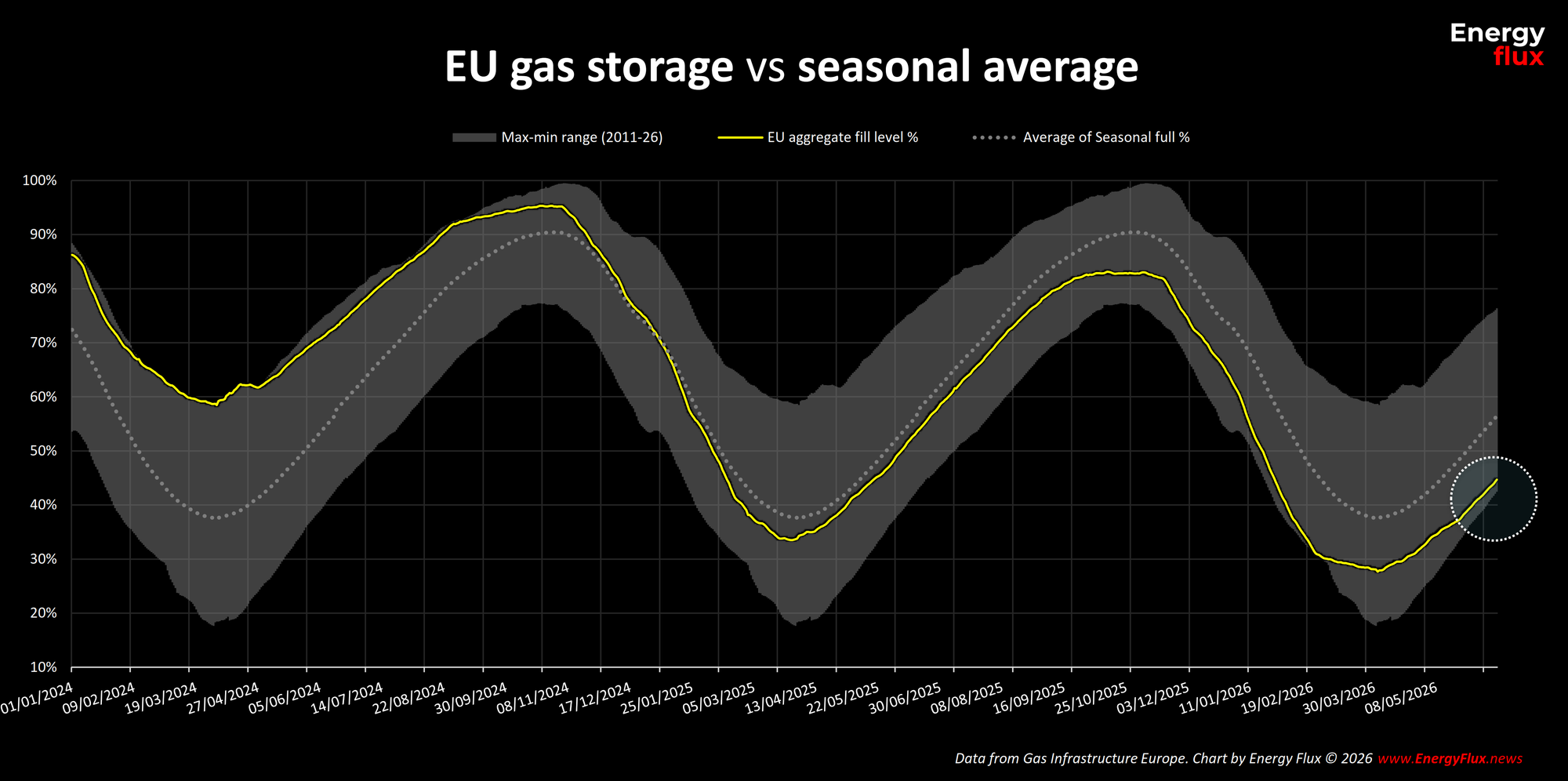
Europe’s gas stores are around 45% full in mid-June, below the crisis summer of 2022 and well beneath the five-year seasonal norm. Injection economics remain weak. Winter risk is visible. The market signal is muddled. And now the sector itself is split over what should happen next.
Eurogas wants market discipline restored. GIE wants storage’s insurance value paid for. GTS wants emergency cover against physical rupture. The Commission wants rules that do not break the very market it is trying to save.
They cannot all be right. But nor are they all wrong.
The storage debate keeps misfiring because it treats gas storage as a special asset class, rather than a bundle of distinct services. Energy security does not require Europe to choose between blind faith in the market and permanent protection for asset owners. That is a false choice.
The better starting point is the consumer. What service is being bought? What risk does it reduce? Does it cut cost, carbon and physical exposure? And could another resource provide the same service more cheaply, cleanly or reliably?
That is where Energy Flux parts company with the usual debate.
Storage has several distinct jobs, and each needs a different instrument. Market signals matter, but they are not sacred, and intervention need not be taboo. It just has to be precise, competitive and tied to the service consumers actually need.
The full piece below examines why the forward curve market signal is useful but incomplete, the strengths and weaknesses of each position paper, and why Europe needs a more sophisticated regime than either pure market faith or broad asset protection.
💥 Article stats: 3,600 words, 3 charts, 14-min reading time

💡 Don't be left in the dark. Get the full analysis to understand where the gas storage debate is heading, and where it risks veering off course.

Member discussion: Gas industry goes to war over EU storage rules
Read what members are saying. Subscribe to join the conversation.