Unintended consequences
Attempts to break the US-Iran stalemate are raising the risk of conflict sprawling sideways into dimensions the market has not yet priced


The US-Iran war has settled into something harder to price than outright escalation: a calibrated stalemate. Neither side can take a decisive move, neither will capitulate. Bellicose rhetoric is followed by kinetic action that changes little on the ground, but jacks up risks of unintended consequences and sideways escalation.
On Saturday, Ukraine struck an Iranian cargo vessel in the Caspian Sea with a long-range drone, killing a sailor. Kyiv said the ship was carrying drones and missiles to Russia. Tehran called it a “hostile and criminal act” carried out “at Israel’s behest” and vowed it could not go unanswered. For about 48 hours there was open speculation that Europe’s war and the Middle East’s were merging into one nightmarish transcontinental conflict.
Then both sides stepped back. Kyiv reframed the strike as a response to Iran’s long-standing arming of Russia rather than the opening of a new front. Tehran’s threats stayed rhetorical. Analysts read the episode as messaging rather than a new battlefront. This is the calibrated stalemate in miniature: a real escalation, absorbed and defused, nothing settled, and a sting in the tail.
Cairo caught in the crossfire
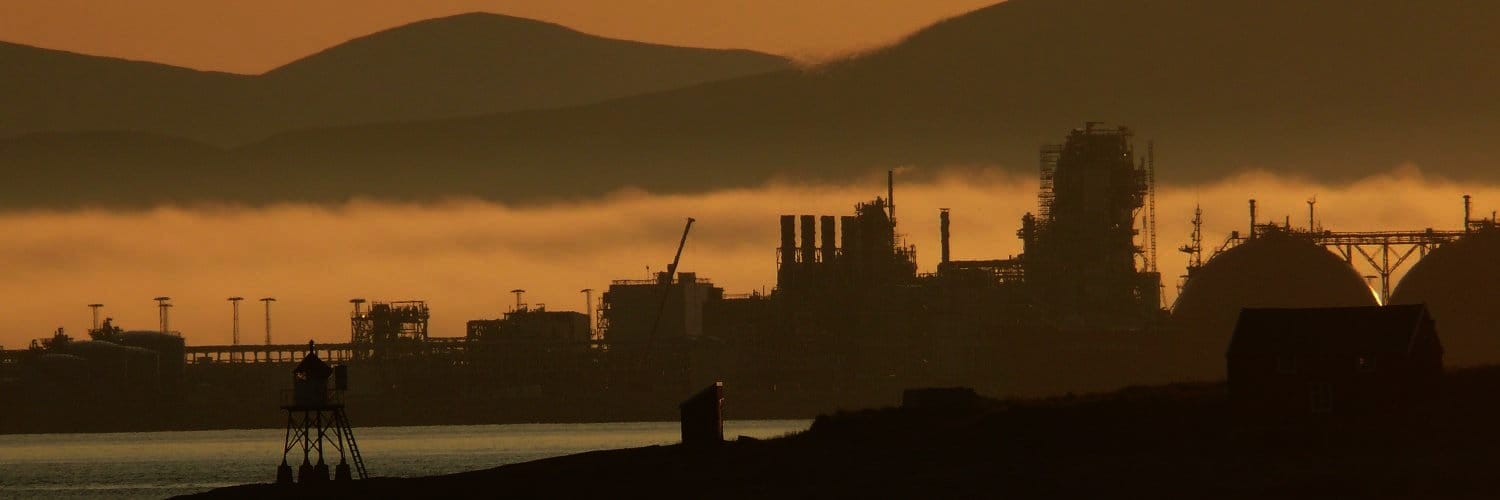
It didn’t stop there. Iranian state television reportedly named Egypt’s Damietta port as a possible target for retaliation against Ukrainian interests. Then a drone struck the Energos Winter LNG floating storage and regasification unit at Damietta. The fire spread to a second floating LNG storage unit. No group has claimed responsibility for what is the first attack on Egypt’s Mediterranean coast.
Energos Winter is one of four FSRUs that Egyptian state gas company EGAS relies on to bridge the gap between domestic production and peak summer demand, and the only one on the Mediterranean. Egypt’s other three FSRUs sit at Ain Sokhna on the Gulf of Suez, and they are already running hard through the cooling peak.
Nor is there a spare: last summer Egypt topped up its fleet with the Ertuğrul Gazi, chartered seasonally from Türkiye’s BOTAŞ in the first overseas deployment of a Turkish FSRU. That vessel is in Turkish waters this year, meaning Egypt is now short of import capacity on the Mediterranean side.
The upshot is that, while Egypt might struggle to meet peak summer demand, LNG vessels destined to dock at Damietta could be sent elsewhere. There are plenty of underutilised terminals on the European side of the sea. Egypt leaned hard on LNG imports in 2025 and was expected to do the same this year. This week’s events could reverse that assessment.
Paid subscribers:
Download this week’s Chart Deck
What that does to price
Contradictory signals such as this have left the EU gas market choppy and range-bound inside a high collar. The Damietta strike is simultaneously bullish and bearish; meanwhile, Qatar sent its first LNG cargo through Hormuz in almost three weeks: the Al Areesh, bound for Pakistan. More than a dozen tankers are idling at Ras Laffan behind it, a latent bearish risk.
All this stokes volatility, in opposite directions. Dutch TTF closed last Friday at €63.58, fell to €58.25 on Monday and €57.73 on Tuesday, rebounded to €60.42 on Wednesday’s Damietta news, and closed Thursday at €58.18. Four fairly large moves, with no discernible direction.
This is a febrile market with conviction pulling both ways. TTF pushed the boat out past €60/MWh and rowed most of the way back. Prices are peaking; volatility is rising. So where does it go from here? This week’s subscriber-only Chart Deck offers several clues.
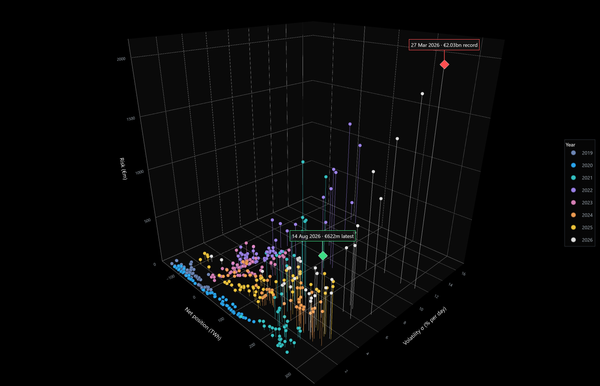
- Our Value-at-Risk analysis shows the funds who drove this rally have run through their risk budget and now hold a book that costs far more to carry than it did a fortnight ago.
- The TTF Sentiment Tracker shows their buying decelerating sharply even as prices rose.
- Europe’s winter storage setup is the most consequential slide in the deck, with our central projection for 1 November refill slipping daily as injections languish.
- The TTF Risk Model has printed its most bullish score since March, with every single input negative at once.
- And the Storage-Speculation Nexus regression model shows where the smart money is positioned to exploit mispricing opportunities along the TTF futures curve.

Upgrade to Premium to unlock the downloadable +100-slide Chart Deck and subscriber-only market commentary below.
Credit card not an option? Need group access, or a corporate account?
We offer flexible subscription options to suit all needs
Member discussion: Unintended consequences
Read what members are saying. Subscribe to join the conversation.