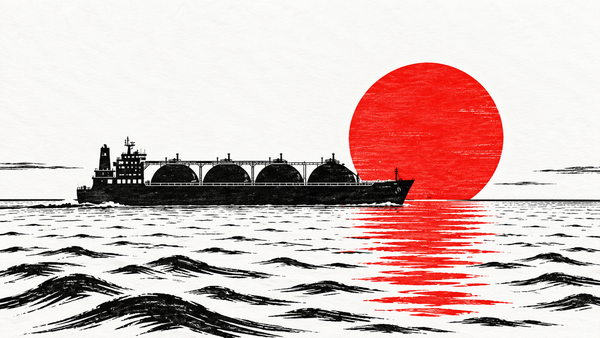
The Hormuz clown show gets serious
Diplomacy has taken the back seat in the clown car. Markets have stopped laughing and started buying

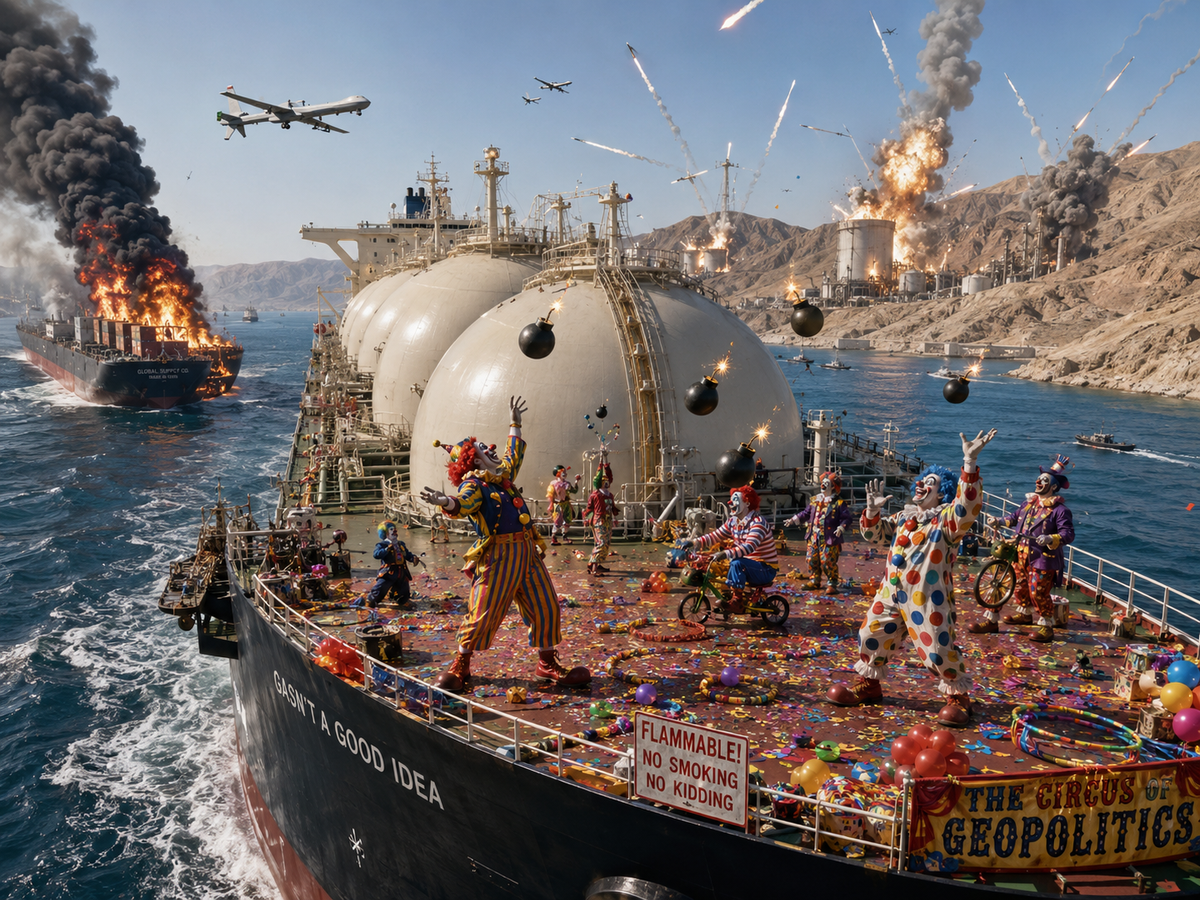
Unserious seriousness
Markets are, finally, looking beyond the clown show. The car with the doors falling off has stopped raising a bonhomie chuckle – not because the blunders have ceased, but because the audience has clocked where the vehicle is heading. And it is not a fun place.
Behind the slapstick sits the strategic incoherence that steered America into this Iran quagmire, and it is the reason there are no palatable off-ramps: by clinging to impossible maximalist war objectives, failing to define achievable outcomes and chronically underestimating its enemy, the Trump administration has painted itself into a corner. The only ways out are further escalation or outright capitulation, and both carry intolerable political costs.
Until now, markets were content to hedge on the reasonable assumption that a climbdown was mutually beneficial. The 17 June peace memorandum gave perfect cover for that trade, even though it was always less a peace deal than a Hormuz deal – one that left ‘arrangements’ for safe passage through the Strait dangerously ambiguous, and largely in Tehran’s hands. Its collapse was entirely predictable.
Now it is official: Iran’s foreign ministry says it has no plans for negotiations and no longer considers itself bound by the MoU. Hedging for peace no longer makes sense; the relief trade is dead until further notice. Diplomacy has taken the back seat in the clown car.
Guardian of the Strait (just for a day)
Nothing better captures the dearth of strategic thinking behind deadly serious events in Hormuz than the transit toll fiasco. On 13 July, Trump proclaimed that America would henceforth be known as ‘THE GUARDIAN OF THE HORMUZ STRAIT’, entitled to a 20% fee on all cargo transiting the waterway it is fighting to reopen.
The scheme was unenforceable, in breach of the law of the sea, and demolished Washington’s own case against Iranian tolls – a gift Tehran gleefully accepted, with foreign minister Araghchi purring that Iran ‘has always been the GUARDIAN’ of the Strait and would charge less. Within 24 hours the plan was abandoned, swapped for vague promises of ‘MASSIVE’ Gulf investments into the US: no named countries, no numbers, no documents. Another risible TACO.
The clownishness should not obscure the escalation. US forces have now struck Iran for six consecutive days, hitting coastal defence installations from Bushehr to Bandar Abbas, and the naval blockade of Iranian ports was reinstated on 14 July. Iran is answering by striking America’s allies: cruise missiles hit two Emirati tankers in the Strait, killing an Indian seafarer; air-raid sirens sounded over Bahrain and Kuwait; and Jordan intercepted four Iranian missiles entering its airspace. Each rung up the escalation ladder makes a climbdown harder to sell in either capital, and closes off what little remains of America’s exits.
Chokepoint contagion
Nor is Hormuz the only chokepoint under stress. The Houthis have entered the fray, launching reprisal strikes on Saudi Arabia and, per Reuters, deploying missiles and drones near Bab el-Mandeb after Tehran asked the group to prepare to close it. That threatens the safety valve that has kept Gulf barrels moving: some 7.4 million bpd of petroleum transited Bab el-Mandeb in June, up from 4.2 million a year earlier, as exports rerouted around Hormuz via the Red Sea.
Meanwhile, Ukraine is rewriting the rules of maritime warfare. Ukrainian drones struck 136 vessels of Russia’s shadow fleet across the Sea of Azov and the Black Sea between 6 and 15 July, including 20 in a single night as the campaign pushed into deeper waters. If this is the model for 21st century warfare, all seaborne commodities will need to contend with a deeply hostile operating environment. Cheap drones have made crippling merchant shipping at scale look routine. Today it is Ukraine hunting Russia’s oil tankers; nothing says the tables won’t be turned tomorrow, with drones of a different allegiance hunting a different class of vessel.
The entire architecture of seaborne trade – insurance, crewing, chartering – rests on the assumption that ships are not targets. That assumption is being shredded in the Azov, the Black Sea and the Gulf simultaneously. LNG will not be immune from this paradigmatic shift in operational risk.
Qatar’s reckoning
QatarEnergy has extended force majeure to September for some long-term customers in Europe and Asia, and halted plans to ramp up loadings at its Ras Laffan liquefaction megaproject*, after the projectile attack that set the laden Al Rekayyat LNG carrier ablaze in the Strait. Even Doha, the most determined optimist in this conflict, is having a reckoning with reality.
Energy Flux has consistently held the view that unbridled optimism in Qatar’s ability to restart liquefaction activities and ramp up output, following damage to two of its LNG trains at Ras Laffan, was misplaced. The engineers were never the constraint; the critical path has always been, and remains, the ability to safely and reliably transit Hormuz. Ramping up sent a reassuring message that the market is no longer able to take at face value.
Well, those chickens are coming home to roost.
Captive to the bulls
All of which brings us to a European gas market now held captive by bullish sentiment. TTF has smashed through the €50/MWh ceiling that held since late March, and the price action suggests the market no longer treats that level as a ceiling at all.
The fuel is a toxic mix: a ballooning EU storage deficit that must be closed at whatever price the market demands, mounting anticipation of resurgent Asian LNG demand competing for the marginal cargo, winter scarcity creeping ever deeper into the curve, and speculative capital redeploying real money into high-conviction length – all of it marinated in a relentless flow of dispiriting wartime headlines from the Middle East.
The question that matters now is not whether the bulls are in charge (they are) but how much dry powder remains to stoke the rally higher, and what it would take to force them to back down. This week’s subscriber-only Chart Deck answers both.
* This post has been amended to correct a previous incorrect statement that QatarEnergy had "halted its Ras Laffan mega-expansion project". For clarity: the halt applies only to returning existing capacity to operational status, not the expansion project.
This week’s deck runs to 125 slides of proprietary models and vessel-tracking intel. Upgrading to paid unlocks all of it, including:
- TTF Sentiment Tracker – how investment funds and commercial hedgers are positioned after the €50 breakout
- TTF Value-at-Risk – how much risk budget the bulls have left to fuel the rally, and what would force them to fold
- TTF Risk Model – audited, reworked and back-tested this week, and now printing an emphatic new signal
- The Storage-Speculation Nexus – where fund money meets Europe’s restocking task, plus a curious story unfolding in summer 2027 pricing
- LNG Physical Balance Index – our price-gated read on how tight the global LNG market really is
- Hormuz Closure LNG Supply Impact Model – when does new supply finally offset lost Gulf volumes? Three scenarios, out to 2030
- Notable vessel movements – trapped Qatari carriers, quiet diversions and some eyebrow-raising first voyages
Upgrade now to get the full picture, and the tools to build your own scenarios.

Credit card not an option? Need group access, or a corporate account?
We offer flexible subscription options to suit all needs
Download this week’s Chart Deck

Member discussion: The Hormuz clown show gets serious
Read what members are saying. Subscribe to join the conversation.