The market that cried peace
Credulous energy markets have stopped pricing Iran, and started pricing Trump’s presidential word salads instead. This cannot end well.

One hour.
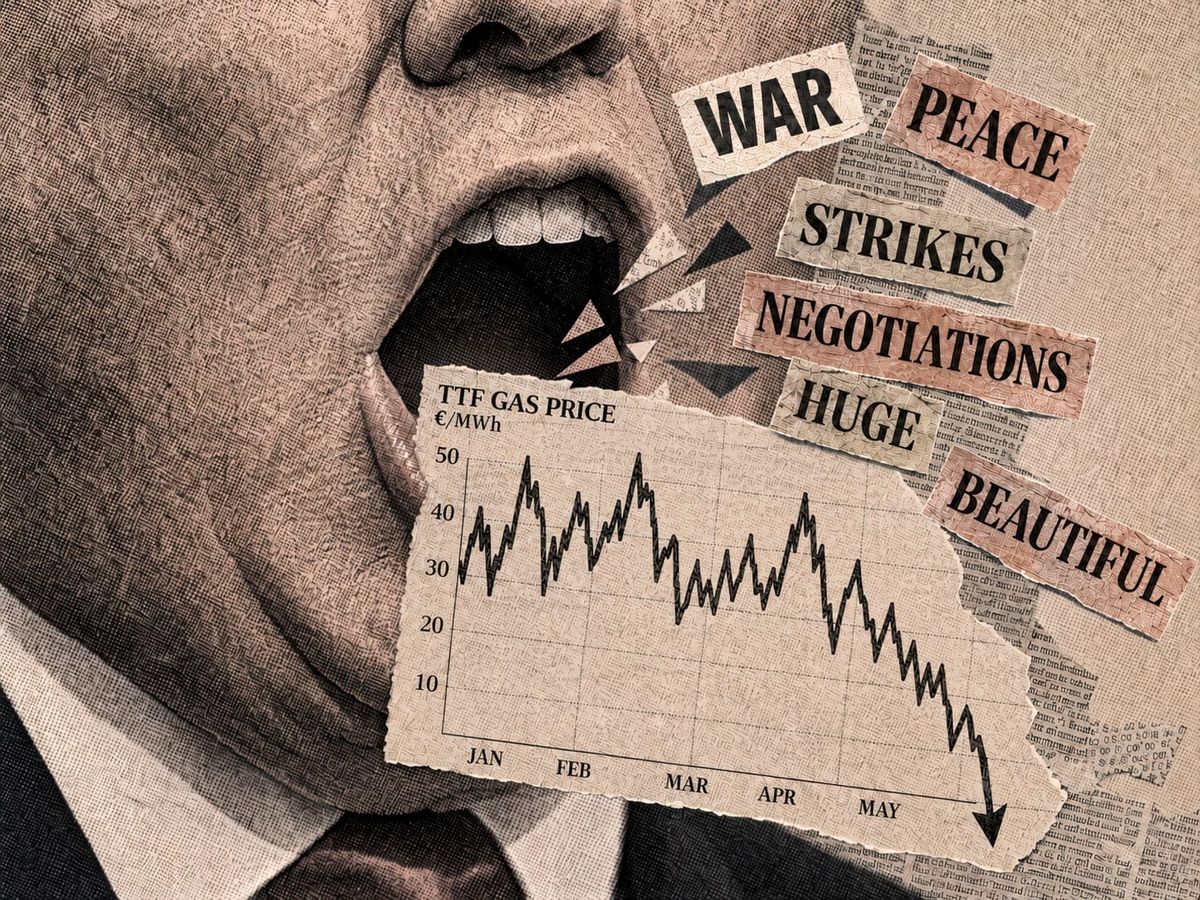
That’s roughly the window between Donald Trump posting on 11 June that the US would hit Iran “VERY HARD TONIGHT” and soon seize Kharg Island, and the US president phoning Fox & Friends to muse that he didn’t think America “has the stomach for it”.
Same morning, same news cycle. The threat and its own retraction, filed almost simultaneously, as though conviction were just another thing to be A/B-tested in real time. By the afternoon he’d formally cancelled the strike and was selling a “great settlement” instead. Fighter jets were reportedly still circling near southern Iran in anticipation of the strike signal while Trump was talking up some fantastical peace deal signing ceremony that won’t happen in Europe this weekend.
The market, as ever, did exactly as it was told. TTF dropped 4% to hit intra-day lows of ~€47/MWh, its lowest price in weeks. Brent shed 3% to settle at $90.38, then kept sliding to $89.15 after hours. WTI slid 2%. A collective exhale, priced to the decimal, in dutiful response to a man who had that very morning argued both sides of his own war before most of Europe had finished lunch.
Here’s the thing about being played: it only works if you keep showing up to play. The EU gas market has ridden this exact rollercoaster since late February, through the 8 April ceasefire that wasn’t, the 12 April blockade, the May tolling theatre, the 48-hour ‘Project Freedom’ debacle, and three separate Kharg Island threats. Yet the price-makers keep showing up. Every time. Selling the de-escalation, buying the flare-up, selling the de-escalation again, as though the last umpteen iterations never happened.
There is no peace process. There is a feed, a president who knows his words move trillions of dollars of capital, and a market that keeps mistaking his mood swings for news.
And the people moving real money through European gas hubs are treating each press conference word salad as though it carries the weight of a signed treaty. Except, increasingly, it isn’t people at all. The AI-driven algo trading systems that now set the intraday tempo on TTF and NBP swallow each Truth Social post whole and price it in milliseconds. Critical thinking is outsourced to code that cannot tell a negotiating bluff from a documented lie, and was never built to ask. The machine reads “peace settlement imminent”, matches it to a direction, and fires.
We are told that the trading smarter systems are calibrated to down-weight or delay reactions to actors who play fast and loose with the facts. But watching prices move in real-time as the empty words spill out of this man’s mouth, there is little reason to believe any of it.
But that is how energy markets operate in 2026. And so it is incumbent upon analysts to accept this reality and weigh up the implications. And the implications are genuinely interesting; not least because yesterday’s artificially-induced selloff on TTF in response to the latest ‘Iran peace’ theatrics exacerbate the more structural movements that will define market direction and momentum over the rest of summer and beyond.
This week’s Chart Deck follows the money, the molecules and the margins shaping the next phase of the summer EU gas market and global LNG trade. It traces the financial flows, risk budgets, trade dynamics and arbitrage economics that will decide who secures the marginal cargo — and who gets priced out.
Paid subscribers get the full 115-slide Chart Deck, plus a detailed market overview tying the data into a coherent view of EU gas risk. Every claim is backed by the charts.
Upgrade to Premium to unlock the full Chart Deck and subscriber-only analysis.
Member discussion: The market that cried peace
Read what members are saying. Subscribe to join the conversation.