Update to the Hormuz LNG supply model
Quick re-opening, or prolonged disruption? Model how Middle East diplomacy and conflict impact fast-changing global LNG supply balances, in our improved scenario engine.

Following user feedback, I have implemented several major improvements to the Hormuz Closure LNG Supply Impact Model, which was released on Tuesday alongside a free-to-read Deep Dive.
The biggest single change is a more dynamic treatment of how Hormuz LNG transits might evolve. The first iteration of the model allowed only a single ‘Hormuz reopening’ percentage cap and date, as if Hormuz flows would remain in a fixed state forever. In hindsight, this was unrealistic.
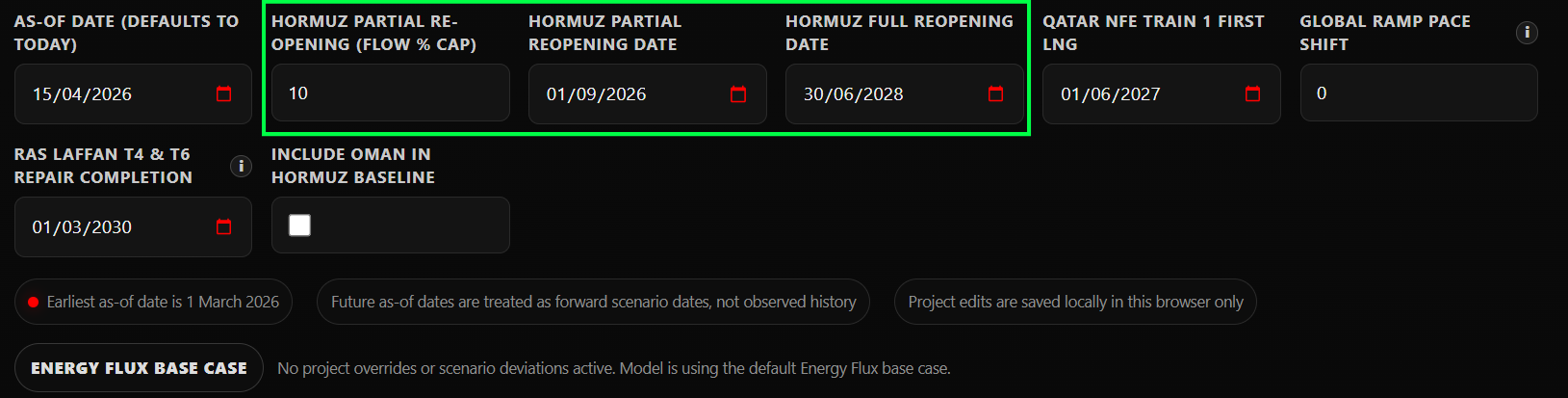
The new iteration allows users to set two key parameters: first, an initial partial reopening date from which exports resume at a user-defined percentage cap; and second, a final full reopening date when Hormuz LNG transits return to 100%. The model plots a smooth recovery curve between the two.
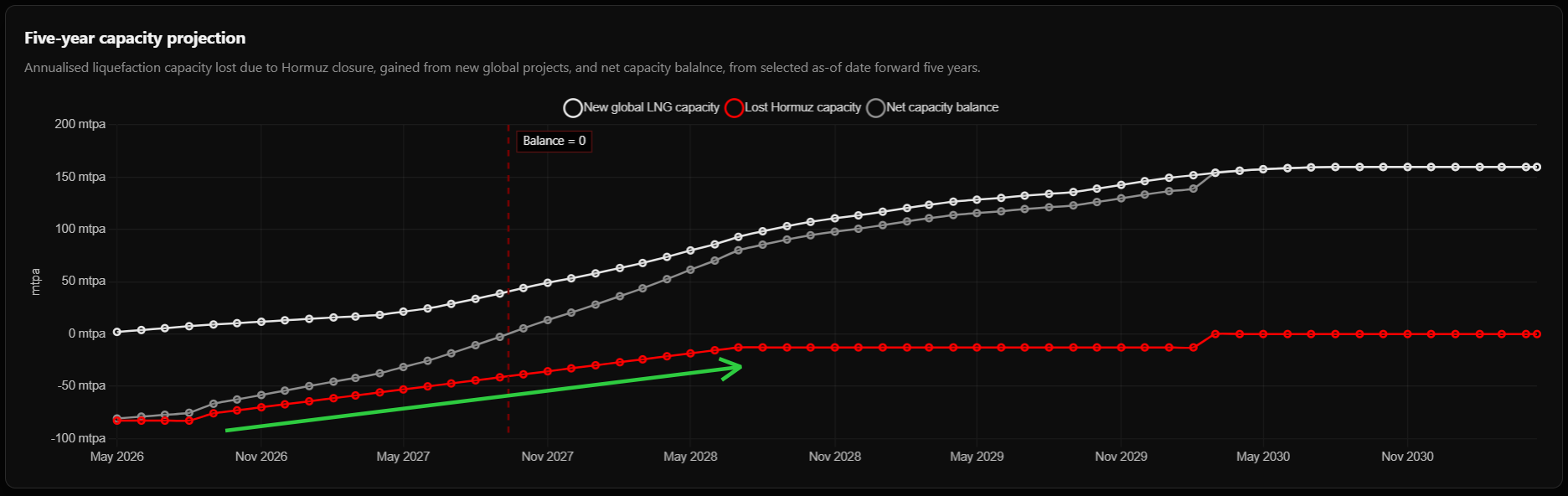
Users can now model different ramp-up scenarios for the reopening of Hormuz. If you think all sides in the conflict are strongly motivated to agree a peace settlement and restore Hormuz shipments quickly, you can model that. Or maybe you see diplomacy failing and open conflict hindering commercial shipping through the Strait for many years. You can model that too.
The resultant supply projections from different scenarios vary wildly, which I find valuable for understanding the profoundly dynamic situation confronting Middle East exporters.
My own view is that partial Hormuz LNG transits could resume at around 10% from September 2026, followed by a gradual restoration of flows to 100% in mid-2028. So I set the model to default to these.
Other changes & updates
The model contained a few bugs and quirks relating to the treatment of LNG projects that were operating prior to 1 March but still ramping up. Namely, LNG Canada and Plaquemines Phase 1.
The new version fixes these to give a more realistic treatment of how their remaining capacity could ramp up over the observation period – all of which can be edited in the project table.
Also:
- Plaquemines Phase 2 has been reclassified as a future expansion that ramps from first LNG in April 2027, with corrected nameplate capacity.
- Project status is now dynamic and changes with the selected As-of date.
- COD and Utilisation manual inputs have been removed because they did not improve model outputs.
If you notice other bugs, or have any other feedback or queries, please do message me or leave a comment on this thread in Flux Exchange.
New assumptions, more nuance
As a result of these changes (and a few tweaks to the underlying assumptions), the model outputs have changed quite dramatically in the Base Case.
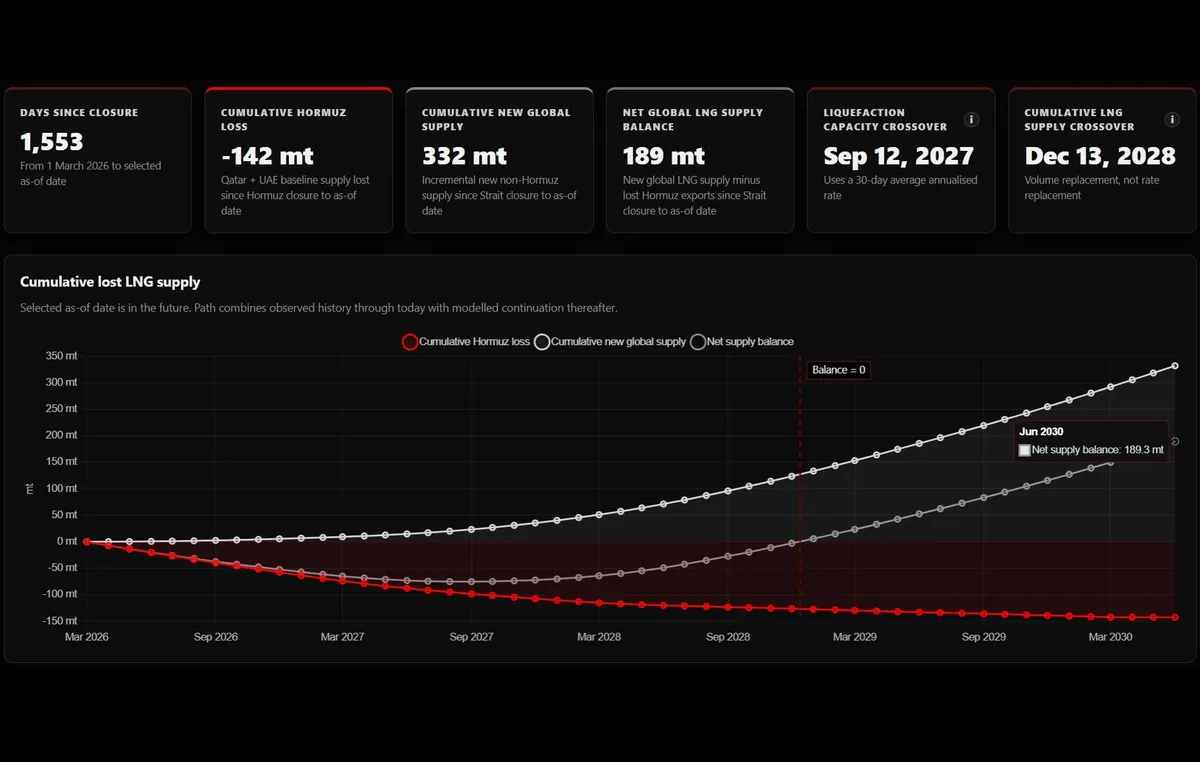
Rather than depicting a cumulative supply deficit stretching into the 2030s regardless of the trajectory of the new supply wave, it now depicts a more nuanced picture: lost Hormuz capacity is offset by new projects in Q3 2027, and the cumulative supply loss evaporates by late 2028.
(This is a bit closer to the industry view: Edison CEO Nicola Monti yesterday said the LNG market will return to structural balance “over the next 18 months”, which probably reflects the reality of LNG supply flexibility, plus some slightly excessive corporate optimism.)
I have rewritten Tuesday’s Deep Dive, War vs. Glut: The Great LNG Reckoning, to reflect these changes. I would encourage all readers to check it out. It is free to read 👇
 Seb Kennedy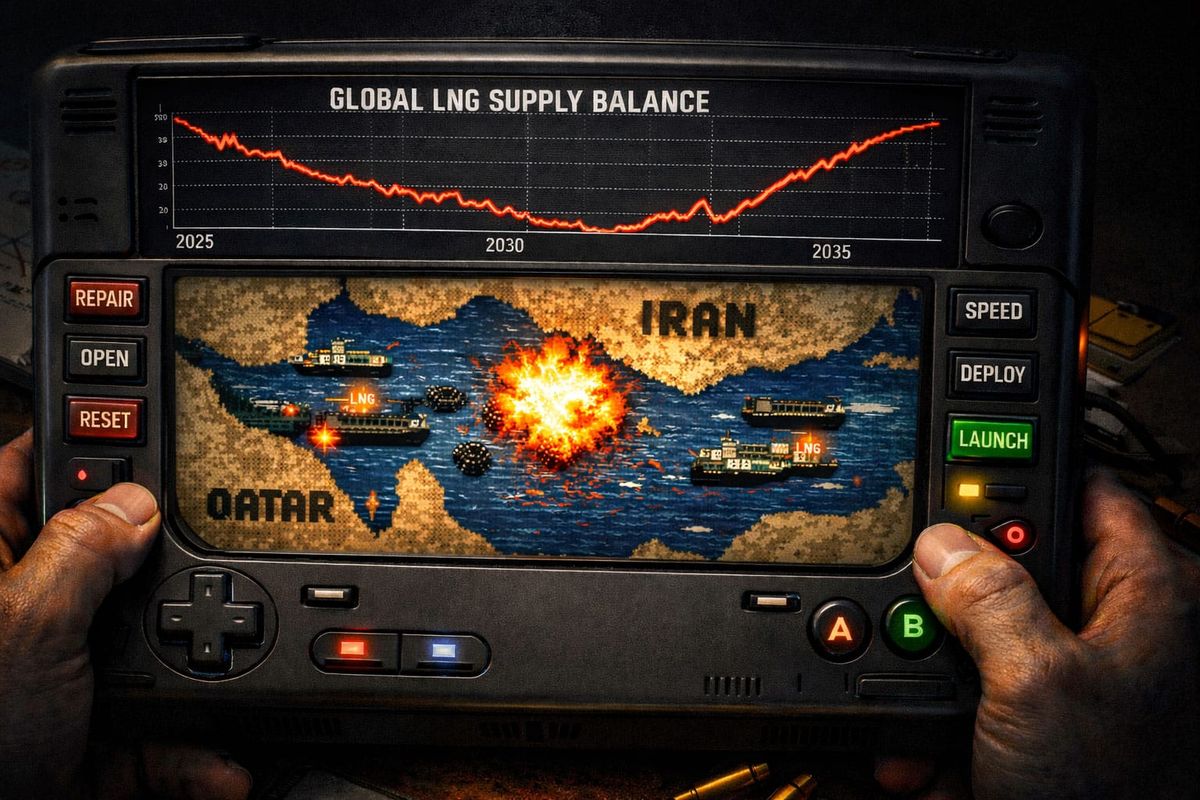
I think the results are more interesting and less depressing: an historic supply shock that will at some point be mitigated by an equally historic supply surge. The key question is when. The model can generate the answer; all you need to do is bring the ingredients.
The interactive model is reserved for subscribers on the Deep Dive and Premium tiers – and it is just one of the many benefits that comes with a subscription. If you’re on one of those paid plans, you can access the improved model immediately. Just log in and click here 👇
Seb Kennedy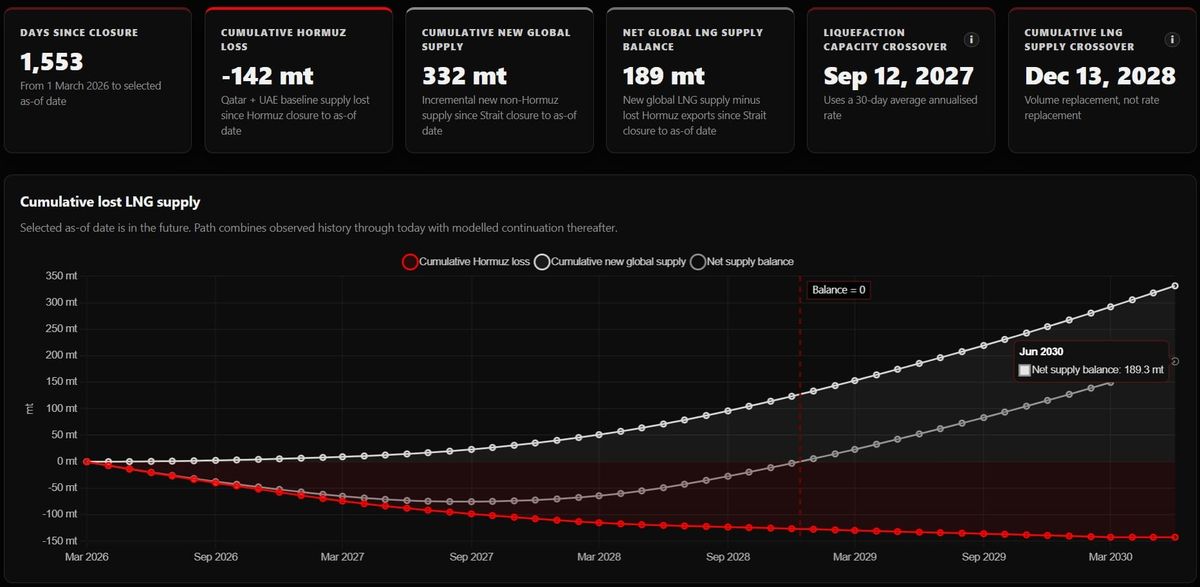
Thanks for reading,
Seb
P.S. If you want to upgrade to a paid plan but cannot do so via credit card, please contact us to discuss corporate billing and managed/group subscriptions. Energy Flux offers bespoke subscription solutions to suit all needs.
P.P.S. Debugging is time-consuming! The next Chart Deck will be published on Friday, all being well🤞

Member discussion: Update to the Hormuz LNG supply model
Read what members are saying. Subscribe to join the conversation.