TTF to the moon?
EU gas price surges past €60 per MWh. But is the top already in?
EU gas price surges past €60 per MWh. But is the top already in?

Europe’s 2022 gas grab taught Pakistan that long-term contracts do not guarantee molecules. Consumers answered blackouts and price spikes with 50 GW of unplanned solar. The result is an energy paradox: Pakistan is short of LNG today, but long on contracted supply to 2030.
Diplomacy has taken the back seat in the clown car. Markets have stopped laughing and started buying
“After four months of paralysis, the relief is palpable. It may also be misleading. And it is almost certainly temporary.” – Energy Flux, 26 June 2026 Well, that didn’t last long. Barely three weeks into a supposed two-month ceasefire, US missiles and Iranian drones are criss-crossing the Persian
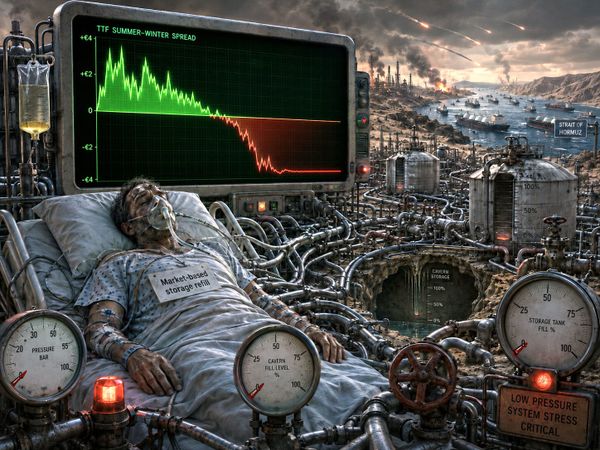
Storage without a signal: the new political economy of Europe’s gas buffer
Shell’s 2026 Outlook leans harder than ever on stratospheric Asian demand to justify a new wave of LNG investment. But post-Hormuz, the data and policy responses all lean the other way.
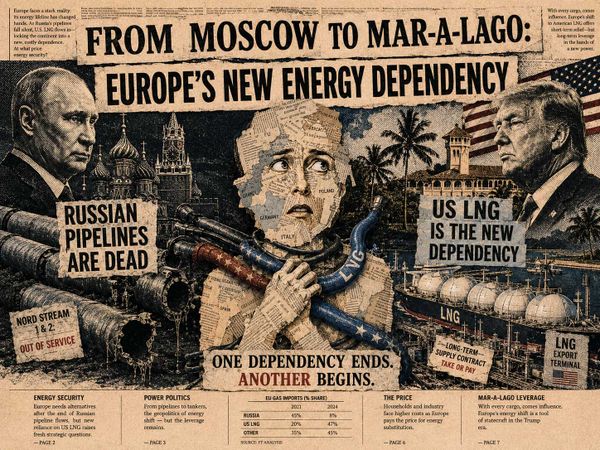
Europe’s energy dependency has a new address. The continent has made a Faustian bargain with US LNG it doesn’t need.

Iran holds the valve, but it is worth less every time it turns... so Tehran is reaching for the gun.
Markets have priced the US–Iran ceasefire as a fully-fledged peace deal. The 60-day clock, and our models, suggest otherwise.

“This is a historic capitulation that will define the structure of global power for the next hundred years.”
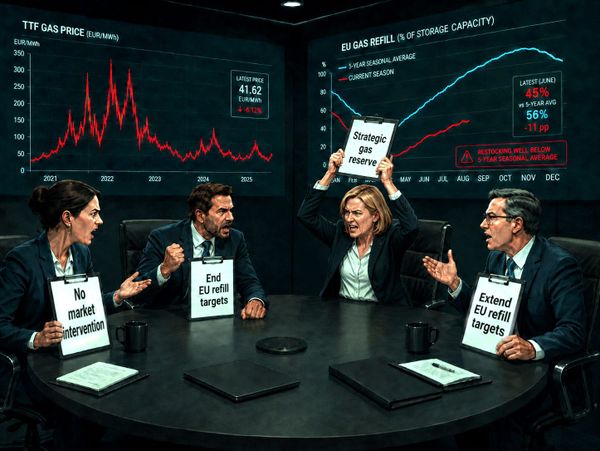
Eurogas wants EU-wide storage targets to expire in 2027. GIE wants them to continue. Gasunie wants a strategic reserve. Brussels warns that botched intervention is a cure worse than the disease. They cannot all be right.
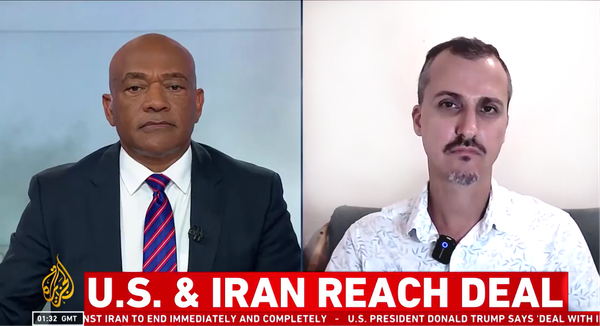
The US says the war is over and Hormuz is open. Energy markets are desperate to agree. Here’s what we know, what we don’t, and why the next two months will be more dangerous than headlines suggest.
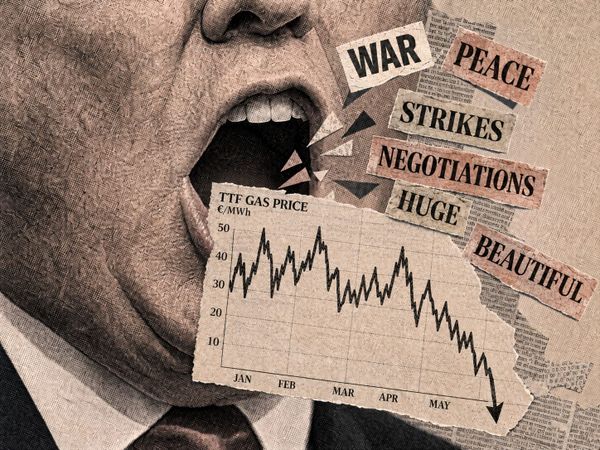
Chart Deck
Credulous energy markets have stopped pricing Iran, and started pricing Trump’s presidential word salads instead. This cannot end well.

Chart Deck
The hard risk budget cap keeping TTF below €50 has lifted. What remains is softer, stranger and harder to trade: a market with room to rally, but no-one willing to push through.
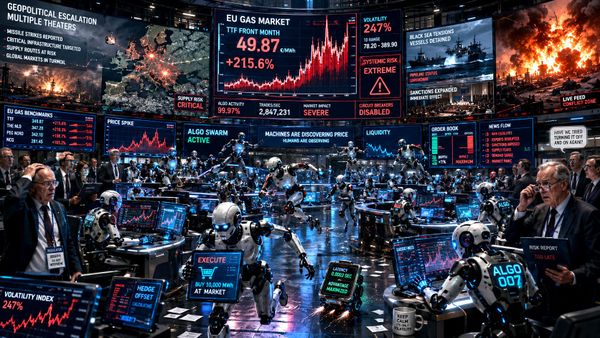
Breaking news
But intervention is unnecessary, says Commission’s Gas Market Task Force

Deep Dives
The EU gas market is pricing two mutually exclusive Hormuz states at once. Energy Flux’s new model quantifies the disconnect between price-implied LNG flows and physical reality in the contested Strait. Either missing cargoes return, or TTF moves higher.

Chart Deck
Atlantic LNG is heading east. EU storage refill is falling behind. And TTF keeps stalling below €50/MWh. This week’s Chart Deck explains why this apparent equilibrium is as soft as melting butter.
The Energy Flux Podcast
🎧 The looming macroeconomic shock, ballooning winter risk for EU gas markets, demand destruction & post-Hormuz narrative whipsaw

Chart Deck
The gas market is no longer pricing a clean Hormuz reopening. It is pricing something messier: conditional transit, shifting LNG flows, nervous funds, and a shortfall in European gas storage injections.
Deep Dives
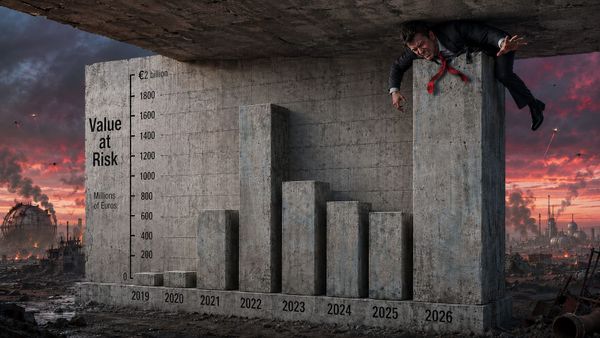
Value-at-Risk: Why TTF can’t break €50/MWh despite investment funds holding a record net long position in an unparalleled bullish setup
Guest post
The fragile bridge back to molecular normality is fraying

Chart Deck
Prolonged closure jacks up near-term volatility, and sets the stage for an abrupt reversal: macroeconomic shock + demand destruction + new LNG supply wave
Chart Deck
For 55 days, the war-shocked global LNG market has been balanced by Asian state buyers going without. One just said, enough is enough.
The Energy Flux Podcast
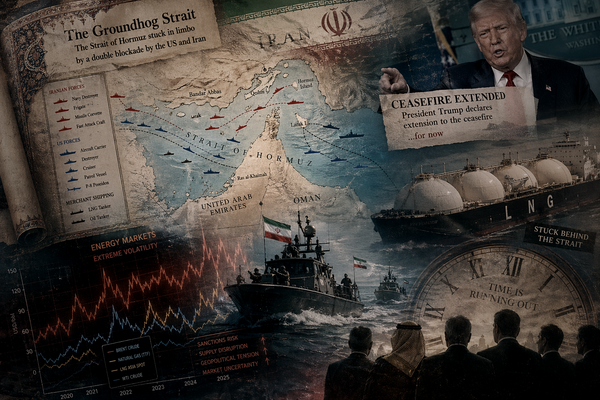
🎧 US-Iran ceasefire extended, Hormuz still closed to LNG. Could the Strait dominate the US midterms? We created three new LNG supply scenarios to find out.